What am I doing with my life? What am I supposed to do? I see the pain and the suffering out in the world and I don’t know how to handle it. The shiny world where people are going about their business as usual seems to tell me, don’t worry about it, we’ll innovate our way through it all. We’ll master nature’s hiccups in no time because we can do anything we set our minds to. I want to believe them, I really do. It is such a nice thing to imagine: a clean world where everything has its place, there is a process for everything and there are no questions about the workings of nature anymore because, damn, we have figured it out.
And then there is this part within me that is screaming for change. And when I listen closely I can hear, that it is not just screaming for change, but for a radical transformation of the way, we relate to everything else in the world. And when I stand firmly in this pain, I know that this is the only way forward: to embrace the reality of impending radical transformation. This clarity is liberating because it plants a flag in the sand, a line behind which falling back will never be possible again. From now on I am an agent of change on behalf of the planet, humanity, and all living things.
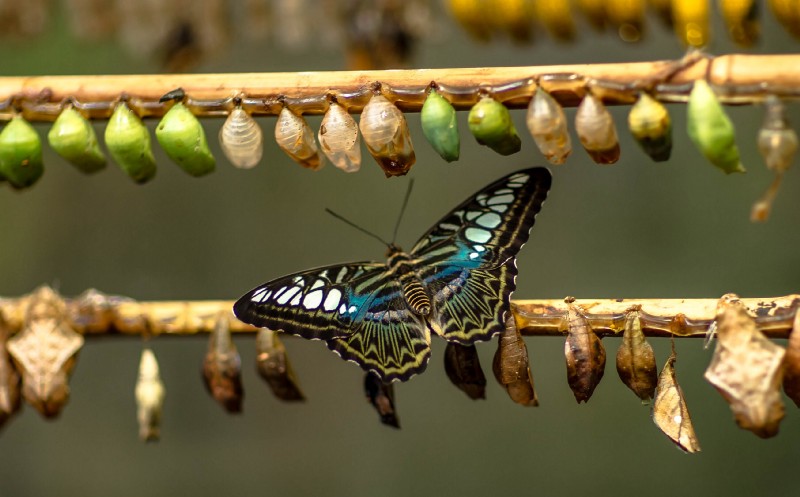
Photo by Håkon Grimstad on Unsplash
But soon I find myself wondering: How on earth are we going to do this? Where are we even going to start and how? How deep do we have to dig to find the very tips of the roots of what we are trying to transform? Is what I am doing contributing to this transformation or am I unconsciously reproducing the patterns I am trying to put to eternal sleep in the history books?
My best guess is to go out into the world and try. And while I try I observe myself and the effects that my behavior has. I compare it to the patterns that I have identified as outdated and harmful and I try to develop a sense for what could be a remedy. At first, it is all a lot of guessing. But after a while, my sense of what is helpful gets a lot more attuned to my new reality. I find that transformational work is work that contributes to a fundamental shift in the way that our human societies function. A shift from transactional relationships like in markets and economies, to personal, lasting, and deep relationships. A shift from needing to understand someone to accept them, to a condition less form of compassion, where we see each other as whole and complete without buying into the limiting stories, that society and ourselves are telling about our so-called flaws and issues. A shift from competing for an edge to supporting each other in making an authentic contribution. A shift from linear to circular, from pyramidal to networked. A shift from separating ourselves from nature to recognizing our inherent connectedness and taking on stewardship for the land we live on and off of.
Working in these fields comes with many challenges. The old paradigms that worked for the industrial growth society of competition, oppression, and linear extraction, deny us entry into this new world. Yet they are deeply embedded in our social DNA. So this work first and foremost means work within oneself. Transcending patriarchy, transcending racism, transcending othering and ableism. Being aware that in our lifetime, we might not be able to actually eradicate these patterns, but all we can do might be to get so good at recognizing them, that we can shift our attention to something more empowering as soon as they start playing out. This way we might be able to keep these patterns from seeping into generations to come.
This means learning the skills to recognize ones authentic voice of wisdom and telling it apart from all the baggage that we still carry along with us from the old ways of seeing the world. Transforming the way we view “work”, making it include reproductive work, care work, and emotional work to eventually get rid of work altogether and just live and contribute.
This kind of work is mandatory if humans are to have a chance to stay on this planet for more than just a little bit longer. But it is not a duty. It is a privilege. To get to be in this work is the most amazing dance, that one could imagine. It is an exhausting and painful dance at times, yes. But the beauty of what we are playing and dancing for is greater than anything we could imagine in the words of the old language we use to describe interactions these days.
Come join this work. Look to contribute, support your peers and reach out if you need support.
If you liked this article, if you want to discuss it, if you see things differently, or if you want to take the idea further, please contact me. By mail, Linked-In, or Twitter. I look forward to your message!
About me: I work as a Coach for Regenerative Transformation. This means, I support people to clarify the vision they have for a livable future for all, recognize their challenges and self-limiting conversations and then move beyond those by setting meaningful and attainable goals. If you are interested in what I do with this work, I invite you to check out my website https://jonasgroener.com/.
Have you ever wondered why so many people are so bitter? On some days the world just seems to be full of people, that have no sense of empathy, compassion, or decency. It seems as though they don’t even care that they don’t care. In this article, I want to explore the road to cynicism and take a systemic perspective on why it seems to be so prevalent in our society.
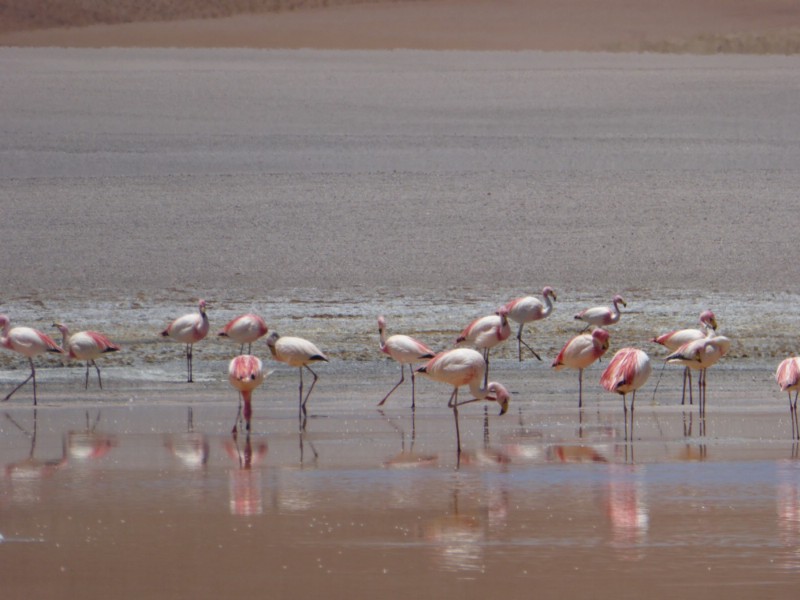
Photo by Chris Barbalis on Unsplash
Praise
This article draws on the work of many different people, but the main concept of cynicism as a result of incoherence with one’s core values stems from Maria Nemeth. You can read more on the idea in her book ‘Mastering Life’s Energies. I try to provide links and attributions wherever I use words or concepts that were conceived of by others.
How does one end up in cynicism?
In contrast to the implication of supportive statements of well-meaning people like “he is just a cynic”, as a response to the hurtful behavior of someone in cynicism, I view it as a state of being, rather than an inherent characteristic of a person. It is the last stop down a road of inaction and detachment from core values. To end up in cynicism — true and bitter cynicism, not sarcasm or dry humor — one needs to consistently do the opposite of what their heart calls them to do. Tempting huh? As I said, cynicism is the last stop on this road. It starts with frustration when one first notices they are not taking action according to their core values. Everyone knows that feeling, it might happen in mild forms a couple of times a week. There is nothing inherently bad about it. In fact, frustration is quite a useful pointer, that we have veered off course a little bit.
The next time you find yourself being frustrated about something, ask yourself: “What matters to me about this situation? And what would someone who cares in this way do next?” Then, go do that thing! This is the most important part. You can’t just expect to feel better by having a “breakthrough” in your head. To get back on track with your core values, the only effective way is to do something in physical reality, that demonstrates what you just saw. And that’s it, no harm done, you went off track for a minute and then you course-corrected. Happens to all of us.
However, if we don’t take action on our frustrations, they keep growing bigger and bigger for a while. They become more and more uncomfortable, irritating, and infuriating. To put an end to this exponential increase of discomfort, the brain has a very effective mechanism: resignation. When frustration becomes too big, we tell ourselves that things are never going to change, so we don’t get so aggravated anymore. We haven’t acted upon something important to us for so long, that it seems as though there could be no way to bring about the change we want to see. It occurs as a version of “I’ve given up on the idea of making this right. There is nothing I can do here.” But at the core of our hearts, we know that we still care and that there is something we can do to change this situation. It makes us go mad, that we are not taking action. To muffle the voice that wants us to go do the right thing, we tell ourselves, that it is way too late now anyway and that it would be too hard to even try.
The discomfort of taking action is a small price to pay, to get out of suffering — Beth Ann Suggs
So if after all the hints and warning signs, that our brain has given us, we still can’t take action according to our core values, we will eventually end up in cynicism. We will truly believe, that there is nothing we can do to change whatever circumstance is important to us. Deep inside we still care a lot, but to not have to go through the discomfort of moving beyond our by now way too familiar stopping points, we will do all sorts of mental yoga to cement the stance that we don’t care anymore. This usually comes with more conclusions about the world, ourselves, and other people, that will be reflected in cynical behavior as we all know it. We construct a whole worldview around our cynicism so that it makes sense.
Why do so many people seem to be in cynicism?
The way we organize our resource flow in the industrial growth society (Joana Macy), is by the logic of markets. To make market economies work efficiently, an abstraction of value (i.e. money) is necessary. On the marketplace, only one thing is valued: someone’s ability to generate money on money return (Jim Rutt). This doesn’t mean that there could never be someone who is completely fulfilled by what they do with their life in a market economy. It just means, that fulfillment is not what market economies optimize for. They create material constraints, that many of us find limiting to our personal growth and the path we would naturally follow if we didn’t have to compete for artificially scarce resources to (in the best case) “succeed” or (usually) just survive. Combine this circumstance with intersectional categories of oppression and stereotypical expectations to what we should do based on our identity and you get a perfect recipe for widespread frustration, resignation, and eventually cynicism. When we are not supported to get clear on what we value at our core and what it is that we’d love to contribute to the world, but rather are confronted with external pressures and expectations, it is only normal that the road to cynicism is familiar to many of us.
What to do about it?
The good news is: recognizing when we missed a turn on the path of our life is a skill we all can develop. It takes some practice but all of us can become masterful at catching even small frustrations, seeing what matters to us, so that we got frustrated, and then acting accordingly. Developing this skill takes some practice and is easier to do with some external support, like that of a life coach for example. Being masterful at this doesn’t mean, that we suddenly have superpowers and can change our circumstances at a glance. It rather speaks to how we show up internally, to the external challenges, that the world will 100% keep presenting us with. Being masterful at this means to be present to one’s core values, even in the face of seemingly insurmountable challenges, and acting in coherence with those values.
Beyond developing this skill for yourself, supporting people close to you, when they find themselves frustrated or resigned is another great way to move beyond systemic cynicism. Meeting someone with compassion in a moment of frustration and supporting them to see what matters so deeply to them, so that they got frustrated about it, is one of the most loving things we can do for the people around us.
Finally, since this article is about systemic cynicism, work to effect sustainable change in the systems you are part of. See where you can contribute to the establishment of lasting support structures, that take the pressure off of people or support them to dismantle long-held ways of viewing the world, so they can be in touch with their core values and the inner voice of wisdom more.
The way into a world beyond cynicism is the same as the way into a world beyond the industrial growth society and the same as the way into a liveable future for all and the same as the way into any future where humans can not only survive but thrive on this planet.
If you liked this article, if you want to discuss it, if you see things differently, or if you want to take the idea further, please contact me. By mail, Linked-In, or Twitter. I look forward to your message!
#Lobaubleibt — Argumente, Annahmen, Besetzung und Räumung
Eine breite zivilgesellschaftliche Bewegung ist gegen den Bau der Stadtstraße und des Lobautunnels. Die Wiener Stadtregierung beharrt auf dem Bau der Projekte und ihrer Notwendigkeit. Dabei wird die Protestbewegung von der Stadtregierung als naiv, kurzsichtig und realitätsfremd dargestellt. Es wird behauptet, man hätte eh das gleiche Interesse — eine lebenswerte Zukunft und eine nachhaltige Transformation der Stadt — es ginge aber nun mal nicht von heute auf morgen und der Bau dieser Straße sei gar nicht das eigentliche Problem. Vielmehr ginge es um ein „Gesamtbild“, das nachhaltig gestaltet werden soll. Es werden zahlreiche andere „nachhaltigere“ Bauprojekte aufgezählt (z.B. Radwege, U-Bahnen und S-Bahnen), die dann im „gesamt Bild“ mit der Stadtstraße nachhaltig seien. Der zentrale Kern der Argumente für den Bau der Stadtstraße ist dabei die Erweiterung der Seestadt, sprich der Bau von neuen Wohngegenden „von der Größe von St. Pölten“. Um eine ausreichende Versorgung und Anbindung dieser Viertel zu gewährleisten sei die Stadtstraße notwendig.
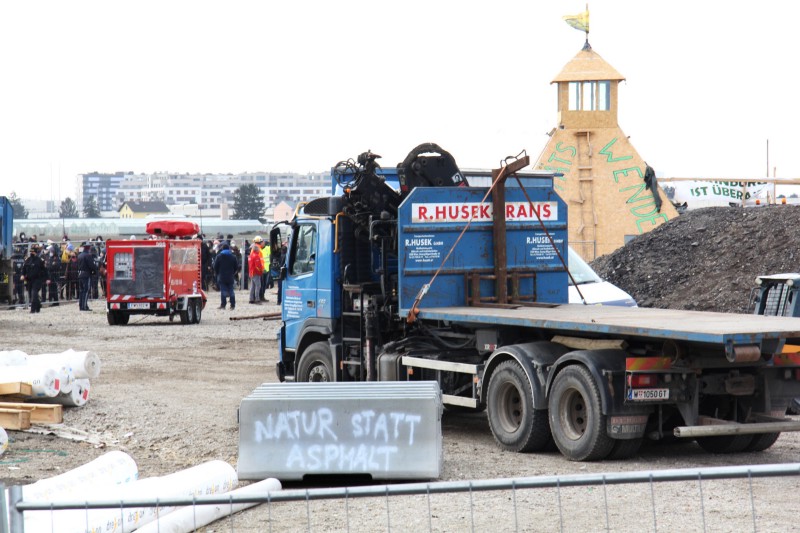
01.02.2022: Das Protest Camp “Wüste” wird geräumt. Hier haben Aktivst*innen 5 Monate lang das Fortschreitender Bauarbeiten an der Stadtstraße verhindert.
Argumente und Annahmen der Wiener Stadtregierung
Dieser Abschnitt bezieht sich hauptsächlich auf die Argumente Ulli Sima’s in diesem Video
Die Annahmen, die die Regierung bei dieser Argumentation trifft, werden jedoch nicht Teil des Arguments, sondern sie werden als gegebene, unumstößlich und selbstverständlich hingenommen. Die erste Annahme ist, dass die Erweiterung der Seestadt, so wie sie geplant ist, sinnvoll und nötig ist. Die zweite Annahme ist, dass die Erweiterung eine hohe Vernetzung mit den Wirtschaftskreisläufen der Stadt Wien und des Umlandes voraussetzt und, dass diese Vernetzung auch den Bau weiterer Schnellstraßen bedingt.
Zu diesen Annahmen ist zu sagen, dass ein Fortsetzen des bisherigen Wachstumsparadigmas des städtischen Raumes, genau das gleiche Prinzip reproduziert, das überhaupt erst für die Klimakrise verantwortlich ist: Naturraum zu domestizieren, umzuwandeln, ihn in eine hochindustrialisierte Wertschöpfungskette einzuspeisen und am Ende urbanen Kulturraum daraus zu machen. Urbaner Kulturraum bedeutet in dieser Sichtweise, einkaufen im Supermarkt, weite Wege zu den Orten des alltäglichen Lebens und eine „gestaltete“ sprich domestizierte Umwelt. Das ganze soll natürlich gut für die Wirtschaft sein — sprich zum Wachstum beitragen — muss also in größere Wirtschaftskreisläufe eingebunden sein. Das bedeutet Lieferverkehr hin und zurück, Wertschöpfung vor Ort für den Konsum anderswo und Konsum von Produkten, deren Wertschöpfung anderswo stattgefunden hat. Lineare Rohstoffkreisläufe durch billig herzustellende, Erdöl basierte Einmalprodukte — klassisch kapitalistische Wachstumslogik.
Was die Stadtregierung mit einer lebenswerten Zukunft meint
Wenn wir diese Annahme als gegeben annehmen, brauchen wir natürlich eine Stadtstraße. Dann bräuchten wir für jeden neuen Stadtteil eine neue Stadtstraße um den ganzen Autoverkehr von und zur Arbeit (die anderswo stattfindet) und den Lieferverkehr für die ganzen tollen Produkte, die sich die Menschen mit ihrem Geld, dass sie anderswo verdient haben, kaufen können, denn das ist es ja schließlich, was wir meinen mit einer lebenswerten Zukunft für alle oder? Oder?
Eine lebenswerte Zukunft, das ist doch eine in der wir alle Abends gemütlich vor dem Fernseher lümmeln können und uns beim 3. Feierabendbier im Einfamilienhaus nebenher auf dem neuen iPad (das 2. dieses Jahr) auf Amazon einen Hometrainer bestellen können, weil wir bei unserem Bürojob nicht genügend Bewegung bekommen haben und neuerdings so schlecht schlafen. Das ist doch die Zukunft in der wir uns immer fragen, warum es allen so gut geht, die wir auf Insta sehen und uns so schlecht, wir arbeiten doch schon so viel und haben auch so viel Geld aber irgendwie haben wir unseren besten Freund schon seit 2 Monaten nicht mehr gesehen und unser*e Partner*in macht uns auch nicht mehr so glücklich wie früher und manchmal, ganz kurz vor dem Schlafengehen erinnern wir uns daran, wie das war damals als wir noch jung waren, als wir noch nicht so viele Verpflichtungen hatten und wir uns vorgestellt haben, wie das mal wird wenn wir loslegen mit dem echten Leben. Dann checken wir lieber nochmal schnell Insta oder denken an die Arbeit morgen, weil diese Erinnerungen sind echt voll schmerzhaft, weil wir uns schon seit Jahren nicht mehr so gefühlt haben.
Ist das die lebenswerte Zukunft die wir anstreben sollten?
Ich glaube nicht.
Die kapitalistische Verwertungslogik, die uns von Geburt an eingetrichtert wird sagt uns, dass wir nur was Wert sind, wenn wir unseren Wert in Zahlen immer weiter steigern. Die Zahl auf dem Lohnzettel, die Zahl neben dem Likebutton, die Zahl der PS, die Zahl die unser Haus Wert ist. Doch: Zahlen machen nicht glücklich. Zahlen sind kein Selbstzweck. Sie sind ein Werkzeug. Ein sehr sehr nützliches Werkzeug, um unser Leben zu bewerkstelligen und wundervolle Dinge zu tun. Doch Zahlen sagen uns nicht, welche Dinge wir tun sollen. Wir können Zahlen auch nutzen um schreckliche Dinge zu tun. Wir brauchen also etwas anderes, das uns sagt, was wir tun sollen mit diesen Zahlen: wir brauchen Werte. Und wenn ich sage, wir brauchen Werte, dann ist das eigentlich nicht richtig, denn jeder Mensch hat schon Werte. Wir alle haben etwas, das uns wichtig ist, das unsere Herzen höher schlagen lässt, das etwas ganz tief in uns anspricht wenn wir es in anderen sehen und das aus uns heraus in die Welt sprechen will. Das Bedürfnis etwas zum Leben anderer beizutragen, andere glücklich zu sehen, Gemeinsamkeiten zu entdecken, uns an der unerwarteten Schönheit der Unterschiedlichkeiten zu erfreuen.
Wenn ich von einer lebenswerten Zukunft rede, dann meine ich eine, in der jeder Mensch die Unterstützung erfährt, die er braucht um sich seiner Werte bewusst zu werden und aus ihnen heraus ein erfülltes, authentisches Leben zu führen, kreativ zu sein, etwas beizutragen, und sich verdammt nochmal nicht verbiegen zu müssen. Abends ins Bett gehen zu können und sich nicht bis zur letzten Sekunde vor dem Einschlafen ablenken zu müssen, sondern mit sich selbst und der Welt in Ordnung zu sein. Beziehungen zu anderen Menschen zu pflegen, nur um der Beziehungen willen, nicht weil wir denken wir müssen, oder weil es uns weiter bringt im Leben uns mit einer bestimmten Art Mensch zu umgeben.
Wie fangen wir an die Zukunft zu schaffen, in der wir leben wollen?
Das geht, in dem wir die Welt in der wir leben, so gestalten, dass sie ein solches Leben ermöglicht. In dem wir die physischen Strukturen so erschaffen oder umnutzen, dass sie die Begegnungen ermöglichen, nach denen wir uns sehnen. Das sie uns zwingen uns mit uns selbst und unserem Verhalten und unseren Beziehungen auseinanderzusetzen. Gemeinschaft muss auch erst gelernt werden. Das geht nicht von heute auf morgen, doch wir können jetzt sofort damit anfangen, in dem wir uns fragen: „Wenn meine Seite „gewonnen“ hätte, wenn alles so wäre wie ich/wie wir es fordern, wie würde ich dann leben?“; und indem wir dann anfangen so zu leben. Jetzt. (Dieser Idee habe ich in den vergangenen Tagen irgendwo aufgeschnappt, ich kann mich leider nicht mehr erinnern von wem.)
Achja, die Sache mit der Umwelt
Das alles einmal ganz abgesehen von den Sachzwängen, die durch die Grenzen unserer Ökosysteme gegeben sind. Die Biosphäre — sprich, das Gesamtökosystem der ganzen Erde; alles was lebt — hat eine bestimmte Kapazität, resilient zu sein, Zerstörung wieder zu heilen, Schäden zu schlucken und abzufedern. Diese Kapazität ist sogar erstaunlich groß. Doch, dass die Biosphäre sich selbst reparieren kann und wieder ins Gleichgewicht finden kann, braucht sie Ruhe — so wie ein Mensch, der krank ist. Im Grunde ist es ganz einfach: wir müssen die Natur einfach nur ihr Ding machen lassen und sie wird von selbst zurück ins Gleichgewicht finden. In der Praxis ist das natürlich nicht ganz so einfach, denn wir Menschen wollen ja trotzdem noch hier leben und das bedeutet immer ein gewisses Maß an „Eingriff“ in die Natur. Allerdings kann und sollte die Perspektive des „die Welt sich selbst heilen Lassens“ ein fundamentales Prinzip darstellen, auf dem wir unsere kollektive Entscheidungsfindung basieren. Wenn wir das täten, kämen wir ziemlich schnell zu dem Schluss, dass jede neue Straße, jeder neue Betonbau, jede neue Pipeline oder Ölbohr-Plattform, eine zu viel ist. Wir kämen zu dem Schluss, dass wir jetzt sofort beginnen müssten Dinge anders zu tun. Wir würden sehen, dass die Selbstheilungskräfte unserer Ökosysteme schon ziemlich strapaziert sind und, dass wir ein gewaltiges Risiko eingehen, in dem wir sie noch weiter strapazieren. Denn jeder Nadelstich könnte der letzte sein, um einen endgültigen Kollaps herbeizuführen.
Die Räumung der Wüste
Am 01.02.2022 um 8:15 marschiert die Polizei mit einem Großaufgebot im Protestcamp ‘Wüste’ ein. In den vergangenen Tagen gab es immer wieder Gerüchte, dass eine Räumung kurz bevor steht und die Dauerbereitschaft der Aktivist*innen zehrte an den Nerven. An diesem Morgen überrascht die Polizei das nur minimal besetzte Camp. Die Wiener Linien (Öffis) machen sich zu Komplizen der Stadtregierung und der Polizei, in dem sie die U-Bahn Station Hausfeldtstraße direkt neben dem Camp für mehrere Stunden sperren, um die Anreise weiterer Aktivist*innen zu erschweren. Dennoch sind innerhalb kurzer Zeit bis zu 400 Menschen vor Ort, die versuchen die Räumung des inzwischen großräumig umstellten Geländes und die Rodung eines angrenzenden Waldstückes, die gleichzeitig gestartet wird zu verhindern. Am frühen Nachmittag wird die letzte Struktur — die “Pyramide” — eingerissen (s.u.). Die Rodung im Wald nebenan dauert auf Grund des mutigen Einsatzes von Aktivist*innen bis zum späten Nachmittag an. Diese besetzen immer wieder Bäume und Rodungsmaschinen. Schlussendlich werden über 50 Menschen verhaftet. Bis zur Veröffentlichung dieses Artikels am Tag darauf um 11:30 sind immernoch knapp 40 von ihnen in Polizeigewahrsam.
01.02.2022: Das Protest Camp “Wüste” wird geräumt. Hier haben Aktivst*innen 5 Monate lang das Fortschreitender Bauarbeiten an der Stadtstraße verhindert.
Ganz viele Menschen sehen das alles schon. Das sind die Menschen, die über die vergangenen 5 Monate die Baustelle bei der Hausfeldtstraße — genannt Wüste — besetzt hielten. Das sind die Menschen, die gestern mit Gewalt von dort entfernt wurden und deren Häuser und Hütten innerhalb weniger Stunden restlos entfernt wurden. Das sind auch die Menschen, die, als sie davon erfuhren, dass die Wüste geräumt wird, sich sofort auf den Weg gemacht haben um die Besetzer*innen zu unterstützen und den Abriss des Camps und die Rodung eines angrenzenden Waldes so gut es geht zu unterbinden oder zumindest zu verzögern. Das sind die Menschen, die dabei ihre eigene Unversehrtheit auf’s Spiel setzen, in dem sie sich Baggern in den Weg stellen, diese besteigen, sich der Gewalt der Polizei aussetzen, ganz bewusst und in voller Klarheit darüber, was das bedeutet. Wenn die Wiener Stadtregierung irgendein ernsthaftes Interesse daran hat, glaubwürdig zu sein wenn sie sagt „Wir stehen für eine lebenswerte Zukunft für alle“, dann sollte sie diesen Menschen zuhören. Ihnen wirklich zuhören und ihre Stimmen etwas zählen lassen. Denn wer mit dem eigenen Körper den Bau einer Straße oder die Rodung eines Waldes blockiert, tut das nicht aus Spaß, sondern weil es scheinbar keine andere Alternative gibt. Wenn die politische Führung dieser Stadt ihre Aufgabe, den Einwohner*innen so gut es geht zu dienen, ernst nimmt, sollte sie neugierig sein, warum Menschen dazu bereit sind soviel zu opfern, anstatt mit Gewalt auf friedlichen Protest zu antworten.
Danke an alles, Aktivist*innen, die monatelang auf der Besetzung ausgeharrt haben, die bei der Räumung teils kurzentschlossen aktiv geworden sind und die großteils immernoch in Polizei-Gewahrsam sind (stand 02.02.2022 11:30).
Weiterführende Infos
Hirschstetten Retten ist eine lokale Bürger*innen-Initiative, die gegen den Bau der Stadtstraße kämpft. Auf ihrer Website finden sich viele Informationen über die Pläne der Stadt Wien und darüber, warum diese unbedingt verhindert werden sollten. https://hirschstetten-retten.at
Auf der Website der Bewegung #Lobaubleibt findet sich ein Pressespiegel, der gesamten Berichterstattung über die Proteste und die Räumung. https://lobaubleibt.at/presse/
Katie und Micha arbeiten beim Future Matters Project. Das FMP unterstützt die Klimabewegung durch Trainings für politisches Organizing. Wie Katie es beschreibt: “Wir schauen, was soziale Bewegungen erfolgreich macht und wie wir diese Erkenntnisse zurück in die Praxis tragen können.” Wir unterhalten uns darüber was politisches Organizing ist, warum es so wichtig für soziale Bewegungen ist, wie gutes Organizing gelingen kann, warum es für den Erfolg der Klimagerechtigkeitsbewegung wichtig ist ihr Thema in der Breite der Gesellschaft zu verankern, was die beiden motiviert sich vollzeit dem Klimaaktivismus zu widmen und was sie dabei immer wieder hoffnungsvoll stimmt.
Wenn du mehr über die Arbeit oder die Angebote des FMP erfahren willst, schau doch mal auf futuremattersproject.org vorbei.
Wenn dir diese Ausgabe von Shift gefallen hat und du mehr davon willst, melde dich auf jonasgroener.com/ zu meinem Newsletter an. Den verschicke ich ungefähr einmal im Monat mit allen neuen Podcast Folgen, Blogartikeln und Workshopangeboten.
Wenn du Gedanken, Kritik, Anregungen oder Themenvorschläge hast, dann schreib mir doch an shift@jonasgroener.com
Simon ist Sport- und Sozialwissenschaftler, Trainer und Coach. Das Thema, das ihn in all seinen Tätigkeiten begleitet sind Flow Zustände. Mit seiner Firma Nowtation vermittelt er spielerische Ansätze um mehr flow in die Arbeitswelt zu bringen. Als Teal Master und Agile Trainer unterstützt er Organisationen dabei, das nächste Level an Resilienz und Anpassungsfähigkeit zu meistern. Außerdem ist er beim Deutschen Alpenverein als Ausbilder für Mountainbike Guides tätig und ist selbst am liebsten auf dem Rad unterwegs.
In der ersten Folge von Shift unterhalten wir uns über Flow, was das eigentlich ist, wieso jeder Mensch Flow kennt, warum es erstrebenswert ist mehr Flow ins eigene Leben zu bringen, welche Stellschrauben es dafür gibt und vieles mehr.
Wenn dir diese Ausgabe von Shift gefallen hat und du mehr davon willst, melde dich auf jonasgroener.com/ zu meinem Newsletter an. Den verschicke ich ungefähr einmal im Monat mit allen neuen Podcast Folgen, Blogartikeln und Workshopangeboten.
Wenn du Gedanken, Kritik, Anregungen oder Themenvorschläge hast, dann schreib mir doch an shift@jonasgroener.com
Willkommen zu Shift – einem Podcast über Paradigmenwechsel in der Transformationsarbeit.
In diesem Trailer erzähle ich euch, worum es geht bei Shift und was ihr erwarten könnt.
Seid gespannt auf die ersten beiden Folgen, die im Laufe der nächsten Tage online gehen werden. Wenn ihr Ideen oder Vorschläge für Themen oder Interview Partner*innen habt, schreibt mir doch eine Mail an shift@jonasgroener.com
Wenn ihr keine Ausgabe verpassen wollt, abonniert Shift bei Spotify oder Anchor, oder meldet euch auf jonasgroener.com/ zu meinem monatlichen Newsletter an.
In 2021, the world is very confusing. Many of us have the overriding feeling that something needs to change fundamentally. There are many ideas, concepts, and theories about what this change should look like. From technology optimism and liberalism to consumer-critical approaches, to the “back-to-nature” reflex, to communism and anarchism, there are many frameworks of thought about what is the right path to a livable world for all.
As valuable as these concepts and theories are, the landscape of ideas is also confusing. In addition, the heterogeneity of these ideas bears the risk of discussing for discussion’s sake: discussing the best approach is no longer done to agree on the best course of action, but as a discipline of its own, to preserve one’s own identity and to somehow “win the argument”.
However, the orientation that these ideas and concepts give to one’s actions is essential. This function, however, can also be fulfilled in another way: through principles.
“Principle” (from Latin principium = origin, beginning) means a fundamental regularity, on which the concrete shaping of a system follows. To make the matter a bit more tangible, I will try to outline in the following the principles on which the world of today with many of its problems is built.
The principles on which today’s world is built
Being separate/individualism
A fundamental characteristic of contemporary social conditions is that we all exist separately. Separated from each other, separated from our environment and nature. Separate means independent. We are not dependent on the people around us or an intact biosphere. After all, we all have our own bodies, how could we possibly be in touch with each other? At the same time, we are alone with our problems, not seeing that many suffer in the same way from the pressures of the job market, exaggerated ideals of beauty, gender roles, and ideas of success shaped by the media and advertising.
Competition/Zero Sum
The principle of competition assumes that when several parties interact, there are always winners and losers and that the sum of the gain and the loss is always zero. If we accept this principle as true, the consequence is that we are concerned about our own gain before we think about the welfare of others. After all, there is only so much profit to go around. This in turn leads to extremely competitive and manipulative behavior for our own benefit — be it in business, in personal relationships, in everyday work.
Scarcity
The principle of competition is based on the assumption of scarcity. After all, it makes no sense to compete for something of which there is enough for everyone anyway. This principle says: “There is not enough for everyone. Not enough land, water, food, roofs, love, security, care, and carelessness.” Whether this is so, we will see later.
Top-Down-Organization
To keep a global society going under the assumption of scarcity and competition, a certain level of coordination is needed. The form of organization that emerges from competition and scarcity is a highly hierarchical one. Finally, under the assumption of scarcity, it makes sense that there is not enough power for everyone, that is, that some people can have power but not everyone. The consequence is an organizational system in which people have less and less power, pyramiding from top to bottom.
Taking on Debt
Be it in the monetary economy or the consideration of our energy budget: our society only functions because we incur debts. The growth of the world economy is based on the fact that states take on debts to themselves by printing more money. In the same way, this growth is represented by an energetic taking on of debt in real production: The energy budget we have available each day is very clearly defined by the amount of energy that arrives on Earth each day through the sun’s rays. At the moment, however, we use only a fraction of this and meet our energy needs mainly from fossil fuels. In these, energy is stored that arrived on earth millions of years ago as solar energy. So we are borrowing energy from the past instead of fully using the energy that comes to us every day.
Acceleration/Growth
To live up to the principle of competition and to win constantly, the winners must keep growing to continue winning in the future. They must be faster than their opponents to be better at producing and exploiting. This principle only works under the assumption that we can continue to incur debt indefinitely, both financially and energetically.
This all reads rather constricting and scary so far. At least that’s how I feel. Before we get to the optimistic outlook into the future, I would like to invite you to think about each principle and how it is reflected in your life. Also, I’d like to invite you to write to me if I’ve forgotten anything! (Contact at the end of the article)
Principles for a livable future
Now I would like to propose some alternatives to the current prevailing principles. Consider them, as an offer for an alternative compass to navigate through the world. As a proposal for a benchmark for future-oriented action. This collection of principles is not a formulated blueprint for organizing a sustainable society, but my “best guess” about what we should look for when we engage in change work.
Connectedness
We are all connected. I am most connected to the people who are closest to me. But the homeless person in front of the supermarket is also connected to me. We are connected by the social conditions that have created both of our positions in society: his position with very little material resources and security; mine with enough resources and security to write articles like this. What many people who pass this person every day do not admit to themselves, however, is that they also suffer from these conditions, that they would also be better off if they could free themselves from the package of ideals and ideas of a good life that comes free with the birth certificate. They don’t admit this similarity because then they would suddenly have to take an interest in this person, recognize that his problems are also theirs and that their “having ”is at least partly responsible for his “not having”. By seeing themselves as separate from him, it’s easier to pass by, feel sorry for him briefly, and then go back to minding their own business.
Beyond that, we are all inevitably connected by the ecosystems that make our survival on this planet possible. We breathe the same air, eat food grown on the same soil, and put it all at risk together through the same mechanisms.
Compassion*
When we begin to understand our fundamental interconnectedness, we gain the ability to have compassion for others. We begin to understand that within all of us is the hero of our own story, that we all have dreams and want to make a difference. Compassion — as opposed to pity or empathy — is the ability to meet another person at eye level and see them in their entirety. On the one hand, to see their successes, their “positive” qualities. On the other hand, to see their potential to grow and to let go of old patterns. And never to forget that all the doubts and worries and twisted detours we sometimes take are part of it — but they are not what makes us who we are. They are like thin clouds passing in front of the sun.
Cooperation
If we assume connectedness, rather than separation, as the preceding principle, the logical next question is: How can we support each other in contributing to the greater whole? If we all depend on the same resources, how can we best share them? If I have come to a realization through painful mistakes, how can I make it easier for others?
Abundance
In contrast to scarcity, I propose to assume that there is fundamentally enough for everyone. Enough energy and therefore food, enough land, water, love, care, and carelessness. And indeed: every day the sun delivers many thousands of times as much energy to the earth’s surface as we would actually need (thanks Wikipedia). Of course, that doesn’t mean we can convert all that energy into electricity, but that’s not the point. Plants, for example, are very good at making carbohydrates and proteins from electromagnetic energy like that found in solar radiation, forms of energy that are useful to humans. We also have fundamentally no overall shortage of fresh water and land (not yet at least). The point is we are dealing with a question of management and distribution of resources. Not with a question of who gets to eat and who doesn’t.
Self-Organization
At the moment, under the assumption of scarcity, competition fulfills the function of distributing resources. However, if we assume abundance and we are also willing to cooperate, another possibility emerges out of nowhere: self-organization. It works like this: Solutions emerge under the right conditions (I have already written an article about these conditions here), where they are needed, from the interaction of the actors involved. This principle seems to be a fundamental property of our reality, so it seems very counter-intuitive to me to suddenly rely on a pyramidal organization instead of a network-like one in our human-made world.
I have the feeling that these principles if we consistently reflect them in our actions, could point the way to a future worth living for everyone. How do you see that? Do you disagree, or have I missed something? Feel free to email me or get in touch on social media (see below).
__
If you liked this article, if you want to discuss it, if you see things differently, or if you want to take the idea further, please contact me. By mail, Linked-In, or Twitter. I look forward to your message!
*This paragraph is strongly inspired by Maria Nemeth and her ontological coaching model.
A fun way to manage your tasks and plan more effectively
I recently thought I had come up against my capacity limit for how many projects I could effectively work on at once. At least that is what it felt like. I was working all the time but still felt I wasn’t getting anything done. After stewing in my own sweat made of doubts and worries about my own incompetence for a while, I finally saw, that I wasn’t taking much action to use my time more effectively. I just did what seemed most relevant in the moment. While this may work for say housekeeping or spending a chill Saturday with friends when working on many projects that all matter to you at once, it has some pitfalls.
Plan more effectively, not to work more, but to have more moments like this 😉
The pitfalls of “winging it”
You might be familiar with the experience of being super excited about a new project. It feels inspiring and like the greatest idea you ever had the privilege to work on. But as soon as you start getting into the real work things get tricky. You don’t know where to start anymore and everything seems daunting. This is perfectly normal but nonetheless frustrating. Especially so, if you are not making a plan for what to do next, in advance, but rather make it up as you go. When you decide what is most important “on the fly”, it gives that voice in your head, that tells you, that “this is too big”, or that something else is actually way more exciting or important, way too much surface area to attack and throw you off track.
Separate planning and execution
If you separate making a plan for what to do when and executing that plan, when you go to do the important thing that you are up to, there is one less decision to make, where doubts and worries could come up. This helps to stay focused on the actual work. It also gives you the opportunity to really look and see, what the most important thing to do next really is, because you don’t need to do it immediately. This makes it easier to put big and important things on your plate. You also don’t feel so much pressure, to “decide already and get back to work”.
Separate importance from urgency
This perspective really unlocked a whole new level of effectiveness for me. We often tend to think of “urgent” and “important” synonymously, where in fact, they are two completely different things. “Urgent” means, this thing needs to happen within a certain time frame. What “urgent” doesn’t tell you though, is how relevant a task is to your aspirations and goals. This is where “important” comes into play. An “important” task is one, that moves you closer to reaching a goal or demonstrating what you stand for in the world. To represent this difference there is a beautiful quadrant schema, called the Eisenhower Matrix. The differentiation of urgent and important is akin to efficient vs. effective, where efficient means you’re getting a lot done quickly and effective means you are doing the right things, that move you closer to achieving your goals. I’ll explain how I use this for action planning in the next paragraph.
A fun system for managing tasks
So how to do this in practice? I would like to share with you how I’ve been planning my work week, in order to get the important things done with ease and not feel overwhelmed with mile-long to-do lists.
It all begins with a bunch of post-its: Throughout the week I write down tasks on per-project color-coded post-its and collect them on the backlog section of my wall.
Plan more effectively, not to work more, but to have more moments like this 😉
On Sunday evening I take 20–30 mins to add any tasks that came to mind throughout the weekend. Then I sort the backlog into one of the four quadrants of my wall, according to the following algorithm:
Is this relevant to any particular goal for one of the projects? OR: Would it really warm my heart to do this? → If so, put it into the “important” column, if not, put it into the “non-important” column
Does this task have a deadline? Or should it have one? → If so, put it into the “urgent” row and write the deadline onto the post-it, if not, put it into the “non-urgent” row
Once all the post-its from the backlog are sorted into the quadrants, it is time to figure out what to do when.
In order to do this, I first write down all appointments I already know about in my notebook. I then look at the remaining time and block it into working sessions for the different projects, according to how many tasks I have for each project.
Now it is time to assign tasks to working sessions. I do this by the following algorithm:
Are there any important and urgent tasks for any project? → If yes, take them off the wall and put them into my notebook next to the corresponding working session. Order them by their due date. If more than one has the same deadline, order by importance. Ask yourself: “What would be most relevant to my goal? What would move me forward the fastest?”
Are there any important and non-urgent tasks? (There should be! This is the most fun quadrant to work in!) → If yes I take them off the wall and put them into my notebook, next to the corresponding working session. I order them by importance, like before.
Are there any non-important and urgent tasks? → If yes, look at the deadline and size of the task. Often these tasks are small and easy to blast through at the end of a workday when you have already done the big important but scary things.
Are there any non-important and non-urgent tasks? → If yes, I look at what I have so far. If it looks pretty easy to do, I might throw in some non-important non-urgent tasks where I still have space. If the week feels pretty full already, I just leave them on the wall. After all they’re not that important and not urgent either.
Plan more effectively, not to work more, but to have more moments like this 😉
I now order tasks for each day by how much they scare me. I put the scariest things first, because I know, that at the beginning of the day my capacity to go past doubts and worries is highest and that it will decrease throughout the day.
The result of this is a stack of post-its for each day, that I can put in my notebook and take with me. When I start a working session, I only see the first post-it. I don’t look at what is next until I finish the top one. This helps me a lot to focus on what I’m doing right now because I don’t see a whole long list of tasks right off the bat. Plus it is SO satisfying to rip off that post-it, once I’m done (already looking forward to that moment, once I’m done writing this article ;).
Go for “good enough” rather than perfect
As a rule of thumb, when working on anything, I go for “good enough” rather than perfect. This calms down that inner voice, that is always worried, if others will like what I do, if I am qualified to do what I do, if it is valuable at all if it is not perfect, and so on and so on… A good way to evaluate what “good enough” means, is to go for the version of your work, that takes the least amount of effort, that is still worth putting in. For example, if you are writing a blog post: what does it really need to contain, to bring your point across? This way, I can make sure, that I consistently produce results and move forward with ease.
Honor slack time
As this article brilliantly describes, “slack” is super important for being effective. It gives your brain a chance to process whatever has queued up during an intense work session and get ready for whats next. It also gives you a chance to notice the state of your well-being and if you need anything to be well. For me it is this slack time, scattered throughout the week and days off on weekends, where a lot of the planning and laying out of next steps happens in the back of my mind. When I sit down to plan on Sunday evenings, a lot of the mental work has already happened in the background and I only need to let it flow out on paper. This is to say: With enough slack an experience of ease becomes more and more normal and my quality of work increases a lot.
What to do with unfinished tasks?
When I don’t finish a task, because I need to wait for something someone else is doing, or I need to find more information, I put it “on hold” next to the main stack. I may or may not come back to it throughout the day, depending on how urgent it is. If it is still there at the end of the day, I put it back into the backlog, if it can wait until next week. Sometimes I may put it onto the next day’s stack if it really needs to happen quickly.
What to do with tasks that emerge throughout the day?
It is inevitable, that new tasks come up throughout the day. I usually write them down on post-its as I go and put them on the “on-hold” stack. In between tasks or at the end of the day, I decide if this needs to happen today or tomorrow, or if it can go in the backlog. But tasks that are generated out of working sessions, generally have lower priority, than the ones, I already planned for today. This way, I can make sure, that what I planned for is very likely to get done consistently and with ease.
What I love about this
I love this system because it is so tangible. I love laying out things on a wall, being able to rearrange stuff when I change my mind on something, physically feeling how full of a Tuesday I’ll have, when I hold the stack of post-its in my hand, ripping off completed tasks. Also, neon-colored post-its are really beautiful to look at. But most importantly: It allows me to do better work. I can focus much easier on one step at a time and don’t get overwhelmed with the totality of things to do, as often as I used to. I enjoy working much more and I produce better results.
Shout-out to Greg Reinauer and Mazin Jamal for supporting me over months and years to find a way to manage tasks effectively and for hooking me up with a lot of the resources I talked about in this post! Also thanks to Jeremy Blanchard for sharing the article about slack.
How do you manage tasks and time? Do you have any planning systems in place, that you really love? I’d love to hear about it! Leave a reply, send me an email, or find me on Linked-In or Twitter. I look forward to your message!
We live in strange times. The problems of the world today seem to be growing by the day and taking on almost overwhelming proportions. Climate change, polarization and fragmentation of political discourse, worsening economic inequality, the Corona crisis, to name a few. In the face of all this, it is often easy to lose hope, to say to ourselves, “what the heck, nice try, we tried.” Especially since the alternative courses of action that are widely communicated are so darn unsatisfying: eat less meat, fly less, travel less in general, buy organic, and donate some of your income. Great. Very inspiring. What would it be like on the other hand, if it were okay to dream big and be passionate about aspiring to great visions for change?
Living your vision is like climbing a mountain: It’s about you doing it, not about reaching the top. Photo: Jonas Gröner
Yes, all these little changes can make a contribution to larger changes. But they only unfold their effect when many people join in. That’s why it’s so unsatisfying to optimize one’s own life in this way: it lacks punch. In other words, eating less meat is not an experience of self-efficacy. Moreover, this picture of change clearly lacks vision. For although the totality of societal transformation is shaped by the behavior of individuals, it is more than just the sum of its parts.
That is to say: You can make a difference, beyond your consumer behavior.
A Pledge for Big Visions
A vision is a vivid narrative of what one’s own life, one’s own community, a project or even an entire society could look like. It is characterized by possibilities rather than probabilities and triggers a joyful tingling inside us when we think that our life could actually be like this. A vision is a positive expression of what we want to see in the world. Rather than “cities without cars,” a vision would be “cities with well-developed bike infrastructure and affordable public transit.” It’s always more motivating to work for something rather than against something, isn’t it?
Such a vision statement is not a concrete declaration of goals. Rather, it is about building a lighthouse for oneself to orient oneself and align one’s own actions with it. Vision isn’t about “working towards the vision becoming a reality someday.” Rather, clarity about our vision enables us to live out of our vision every day, to keep an eye out for the opportunities that arise for us today and to act accordingly, instead of waiting for the great upheaval.
Your Vision Counts!
Far too often, our visions don’t stand a chance against the “constraints” of life in the 21st century. We either don’t have the capacity to let them emerge or we already have such a fixed image of how our life should be, that we loose touch with what really motivates us from the heart. And when we do recognize a glimmer of our dreams, an inner voice usually comes up immediately, that tells us: “Leave it, stay where you are, it’s safe here and we know our way around. Who knows what dangers lurk over there.” This voice, by the way, finds very creative ways to talk us out of our dreams. It’s just as smart as we are. That’s why it’s often so hard to recognize it for what it is.
So why not give up altogether?
Two reasons: first, there is nothing more beautiful and fulfilling than knowing that you lived today from your own vision. You can certainly imagine this: allow yourself to dream for a moment. What would your life look like in your wildest dreams? What would you do, where would you live, with whom? Now imagine going to bed at night knowing that you lived your dream today. Isn’t that exciting? And isn’t life far too great a gift to just let it trickle away day by day?
The second reason: We need you and your vision! By we I mean all of us, the 7,752,999,999 other people on this planet. The challenges we face are so fundamental that we cannot do without your vision! And I don’t mean your ideas on how to save a little more CO2. I mean the big vision, your ideas for how our society should be organized, where the food for 10 billion people will come from, how we will organize housing, where our energy will come from, how we will measure value and on which ethical foundations we will build our co-existence. Now that may seem like a bit much to take in all at once. But I know that as you read this article right now, you had more than just one idea about these topics. I am absolutely certain that you have answers to these questions that only you can give, because only you have had the very life experiences that shape your perspective.
Because your vision is so important for your life and the world, I ask you: don’t give up on it! If it seems unattainable, break it down into the smallest and most fun step you can think of, talk about it with your friends, and seek support when you get stuck. If your vision is still a little unclear, try to focus on what you can be sure of — the principles that underlie a good life for you. The most important thing is to start, everything else will come along the way.
If you liked this article, if you want to discuss it, if you see things differently, or if you want to take the idea further, please contact me. By mail, Linked-In or Twitter. I look forward to your message!
Im Jahr 2021 ist die Welt sehr unübersichtlich. Es überwiegt bei vielen von uns das Gefühl, dass sich grundlegend etwas verändern müsste und zwar an allen Ecken und Enden. Dafür, wie diese Veränderung aussehen soll, gibt es viele Ideen, Konzepte und Theorien. Vom Technologie-Optimismus und Liberalismus über konsumkritische Ansätze über den “back-to-nature” Reflex bis hin zum Kommunismus und Anarchismus — es gibt viele Gedankengerüste darüber, was der richtige Weg zu einem lebenswerten Leben für alle ist. So wertvoll diese Konzepte und Theorien auch sind, so unübersichtlich ist die Ideenlandschaft auch. Außerdem verbirgt sich in ihrer Heterogenität hinter jeder Ecke eine “Diskutieren zum Selbstzweck-Falle”: das Diskutieren über den besten Ansatz wird nicht mehr betrieben, um sich auf das Beste Vorgehen zu einigen, sondern als eigene Disziplin, um sich und die eigene Identität zu wahren und am Ende des Tages als Gewinner*in dazustehen.
Die Orientierung, die diese Ideen und Konzepte dem eigenen Handeln verleihen, ist jedoch essentiell. Diese Funktion, kann jedoch auch anders erfüllt werden: durch Prinzipien.
“Prinzip” (von lat. principium = Ursprung, Grundsatz, Beginn) meint eine grundlegende Gesetzmäßigkeit, auf die die konkrete Ausformung eines Systems folgt. Um die Sache ein bisschen greifbarer zu machen, will ich versuchen im Folgenden die Prinzipien zu skizzieren, auf denen die Welt von heute mit vielen ihrer Probleme gebaut ist.
Die Prinzipien, auf denen die Welt von heute gebaut ist
Getrennt sein/Individualismus:
Eine grundlegende Charakteristik der gegenwärtigen gesellschaftlichen Verhältnisse ist, dass wir alle getrennt existieren. Getrennt voneinander, getrennt von unserer Umwelt und der Natur. Getrennt bedeutet unabhängig. Wir sind nicht angewiesen auf die Menschen um uns herum oder eine intakte Biosphäre. Schließlich haben wir ja alle einen eigenen Körper, wie könnten wir da nur miteinander in Verbindung stehen? Gleichzeitig sind wir aber auch mit unseren Problemen allein, sehen nicht, dass viele auf die gleiche Art unter dem Druck leiden, der vom Arbeitsmarkt, überzeichneten Schönheitsidealen, Ansprüchen an Geschlechterrollen und durch Medien und Werbung geprägte Vorstellungen von Erfolg ausgeht.
Wettbewerb/Zero Sum:
Das Prinzip des Wettbewerbs geht davon aus, dass es bei einer Interaktion mehrerer Parteien, immer Gewinnende und Verlierende gibt und dass die Summe aus dem Gewinn und dem Verlust immer Null ergibt. Wenn wir dieses Prinzip als wahr annehmen, hat das zur Folge, dass wir auf unseren eigenen Gewinn bedacht sind, bevor wir an das Wohl anderer denken. Schließlich gibt es ja nur eine bestimmte Menge an Gewinn. Daraus wiederum folgt extrem kompetitives und manipulatives Verhalten zum eigenen Vorteil — sei es in der Wirtschaft, in persönlichen Beziehungen, im Arbeitsalltag.
Knappheit:
Dem Wettbewerbsprinzip liegt die Annahme der Knappheit zugrunde. Schließlich macht es ja keinen Sinn, um etwas in Wettbewerb zu treten, von dem es sowieso genug für alle gibt. Dieses Prinzip besagt: “Es gibt nicht genug für alle. Nicht genügend Land, Wasser, Nahrung, Dächer, Liebe, Sicherheit, Sorglosigkeit.” Ob dem so ist, werden wir später noch sehen.
Top-Down Organisation:
Um unter der Annahme der Knappheit und des Wettbewerbs trotzdem eine globale Gesellschaft am Laufen zu halten, braucht es ein gewisses Level an Koordination. Die Organisationsform, die aus Wettbewerb und Knappheit hervorgeht, ist eine stark hierarchische. Schließlich macht es unter der Annahme der Knappheit Sinn, dass es nicht genügend Macht für alle gibt, sprich, dass manche Menschen Macht haben können aber nicht alle. Die Konsequenz ist ein Organisationssystem, in dem Menschen pyramidenförmig von oben nach unten, immer weniger Macht haben.
Schulden-Machen:
Sei es in der Geldwirtschaft oder in der Betrachtung unseres Energie-Haushalts: unsere Gesellschaft funktioniert nur, weil wir Schulden machen. Das Wachstum der Weltwirtschaft basiert darauf, dass Staaten Schulden bei sich selbst machen, in dem sie mehr Geld drucken. Auf die gleiche Weise ist dieses Wachstum durch ein energetisches Schulden-Machen in der realen Produktion repräsentiert: Das Energiebudget, das wir jeden Tag zur Verfügung haben, ist durch die Menge an Energie, die durch die Sonnenstrahlen jeden Tag auf der Erde ankommt, sehr klar definiert. Momentan nutzen wir davon jedoch nur einen Bruchteil und decken unseren Energiebedarf hauptsächlich aus fossilen Energiträgern. In denen ist Energie gespeichert, die vor Jahr Millionen als Sonnenenergie auf der Erde ankam. Wir leihen uns also Energie von der Vergangenheit anstatt die Energie voll zu nutzen, die jeden Tag aufs Neue zu uns kommt.
Beschleunigung/Wachstum:
Um dem Prinzip des Wettbewerbs gerecht zu werden und konstant zu gewinnen, müssen die Gewinnenden immer weiter wachsen um auch in Zukunft noch zu gewinnen. Sie müssen schneller sein als ihre Gegner, um besser zu sein im Produzieren und Verwerten. Dieses Prinzip funktioniert nur, unter der Annahme, dass wir unbegrenzt weiter Schulden machen können, sowohl finanziell, als auch energetisch.
Das liest sich jetzt alles eher einengend und beängstigend. Geht mir zumindest so. Bevor wir zum optimistischen Ausblick in die Zukunft kommen, möchte ich dich einladen, dir zu jedem Prinzip zu überlegen, wie es sich in deinem Leben widerspiegelt. Außerdem möchte ich dich einladen, mir zu schreiben, wenn ich etwas vergessen habe! (Kontakt am Ende des Artikels)
Prinzipien für die Zukunft:
Nun möchte ich einige Alternativen zu den aktuell vorherschenden Prinzipien vorschlagen. Betrachte sie, als Angebot für einen alternativen Kompass, um durch die Welt zu navigieren. Als Vorschlag für einen Maßstab für zukunftsgerechtes Handeln. Diese Sammlung an Prinzipien ist kein ausformuliertes Konzept für die Organisation einer nachhaltigen Gesellschaft, sondern mein “best guess” darüber, wonach wir Ausschau halten sollten, wenn wir uns der Veränderungsarbeit widmen.
Verbundenheit:
Wir alle stehen miteinander in Verbindung. Mit den Menschen, die mir am nächsten sind verbindet mich am meisten. Doch auch der wohnungslose Mensch vor dem Supermarkt ist mit mir verbunden. Wir sind miteinander verbunden, durch die gesellschaftlichen Verhältnisse, die unser beider Positionen in der Gesellschaft hervorgebracht haben: seine Position mit sehr wenig materiellen Ressourcen und Sicherheit; meine mit ausreichend Ressourcen und Sicherheit um solche Artikel zu schreiben. Was viele Menschen, die jeden Tag an diesem Menschen vorbeigehen, sich jedoch nicht eingestehen ist, dass sie auch unter diesen Verhältnissen leiden, dass es ihnen auch besser gehen würde, wenn sie sich von dem Paket an Idealen und Vorstellungen von einem guten Leben befreien könnten, das gratis dabei ist bei der Geburtsurkunde. Denn dann müssten sie sich auf einmal für diesen Menschen interessieren, erkennen, dass seine Probleme auch ihre sind und, dass ihr Haben für sein Nicht-Haben zumindest mitverantwortlich ist. Indem sie sich als getrennt von ihm sehen, ist es einfacher vorbeizugehen, kurz Mitleid zu haben und sich dann wieder um den eigenen Kram zu kümmern. Darüber hinaus, sind wir alle zwangsläufig durch die Ökosysteme verbunden, die unser Überleben auf diesem Planeten ermöglichen. Wir atmen die selbe Luft, nehmen Nahrung zu uns, die auf dem selben Boden gewachsen ist und setzen all das mit dem selben Mechanismus — der industriellen Landwirtschaft — gemeinsam auf’s Spiel.
Mitgefühl*:
Wenn wir beginnen unsere grundlegende Verbundenheit zu begreifen, erlangen wir die Fähigkeit, Mitgefühl mit anderen zu haben. Wir beginnen zu begreifen, dass in uns allen die Held*in unserer eigenen Geschichte steckt, dass wir alle Träume haben und etwas verändern wollen. Mitgefühl — im Gegensatz zu Mitleid — ist die Fähigkeit, einem anderen Menschen auf Augenhöhe zu begegnen und ihn in seiner Gänze zu sehen. Einerseits, seine Erfolge zu sehen, seine “positiven” Eigenschaften. Andererseits sein Potential zu wachsen und alte Muster loszulassen. Und dabei nie zu vergessen, dass alle Zweifel und Sorgen und verqueren Umwege, auf denen wir uns manchmal bewegen, zwar dazu gehören, aber nicht das sind, was uns ausmacht. Sie sind wie dünne Wolken, die vor der Sonne vorüberziehen.
Kooperation:
Wenn wir von Verbundenheit, anstatt Getrenntsein als grundlegendem Prinzip ausgehen, ist die logische nächste Frage: Wie können wir uns gegenseitig darin unterstützen, etwas zum großen Ganzen beizutragen? Wenn wir doch alle auf die gleichen Ressourcen angewiesen sind, wie können wir sie dann am Besten teilen? Wenn ich durch schmerzhafte Fehler zu einer Erkenntnis gekommen bin, wie kann ich dann dafür sorgen, dass andere es leichter haben?
Fülle:
Im Gegensatz zur Knappheit schlage ich vor, davon auszugehen, dass es grundsätzlich genug für alle gibt. Genug Energie und somit Nahrung, genügend Land, Wasser, Zuneigung und Sorglosigkeit. Und tatsächlich: die Sonne liefert jeden Tag viele Tausende Male so viel Energie zur Erdoberfläche, wie wir eigentlich bräuchten (danke Wikipedia). Das bedeutet natürlich nicht, dass wir all diese Energie in Strom umwandeln können, aber darum geht es ja auch nicht. Pflanzen sind zum Beispiel sehr sehr gut darin, aus elektromagnetischer Energie, wie sie in der Sonnenstrahlung vorliegt, Kohlenhydrate und Proteine herzustellen, also Energieformen, die für Menschen nützlich sind. Auch an Süßwasser und Land haben wir grundsätzlich keine Knappheit. Das bedeutet, wir haben es mit einer Frage des Managements und der Verteilung von Ressourcen zu tun.
Selbst-Organisation:
Momentan erfüllt der Wettbewerb unter der Annahme von Knappheit die Funktion der Verteilung von Ressourcen. Wenn wir jedoch von Fülle ausgehen und wir außerdem bereit sind zu kooperieren, entsteht wie aus dem Nichts, eine andere Möglichkeit: die Selbst-Organisation. Lösungen entstehen unter den richtigen Bedingungen (über diese Bedingungen habe ich hier schon mal einen Artikel geschrieben), dort wo sie gebraucht werden, aus der Interaktion der beteiligten Akteur*innen. Dieses Prinzip scheint eine grundlegende Eigenschaft unserer Realität zu sein, es scheint mir daher sehr kontra-intuitiv, in unserer von Menschen gemachten Welt auf einmal auf eine pyramidenförmige Organisation zu setzen, anstatt auf eine netzwerkartige.
Ich habe das Gefühl, dass diese Prinzipien, wenn wir sie konsequent in unserem Tun reflektieren, einen Weg in eine lebenswerte Zukunft für alle weisen könnten. Wie siehst du das? Bist du anderer Meinung, oder habe ich etwas übersehen? Schreib mir doch eine E-Mail oder trete auf Social Media in Kontakt (siehe unten).
__
Wenn dir dieser Artikel gefallen hat, du darüber diskutieren möchtest, die Sache ganz anders siehst oder du den Gedanken weiterspinnen möchtest, melde dich doch bei mir. Per Mail, Linked-In oder Twitter. Ich freue mich auf deine Nachricht!
*Dieser Absatz ist stark von Maria Nemeth und ihrem ontologischen Coaching Modell beeinflusst.