
Author: Jonas

  • Self-Organization as a Form of Governance of Common-Pool Resources

    Self-Organization as a Form of Governance of Common-Pool Resources

    I originally wrote this article for university a view years ago. I first published it at https://derknoten.wien in 2020.

    Abstract

    At the core of climate change is the problem of regulating the access to common-pool resources. Self-organization has been proposed as a mode of regulating the access to these resources. This paper examines existing literature on the conditions under which this self-organization can occur and how they relate to climate change.

    1 Motivation

    I have been interested in alternative governance for a while, especially in decentralization and self-organization. In my search for effective alternatives to the frustratingly slow and ineffective governance models that we as a global society have been employing, I came across self-organization as a concept of systems theory a while ago. Since it is my ambition, to contribute to a shift in perception of options for human behavior in the face of existential crisis, I want to try and explain some concepts and ideas relating to the governance of climate-change and other global scale governance challenges.

    2 Introduction and Definitions

    To understand problems related to climate change and the governance of global commons in general, the research around the tragedy of the commons and common-pool resources is helpful. This paper aims at providing an overview over the topic of common-pool resources, a (non-comprehensive) summary of the research on self-organization of common-pool resources and some more climate specific implications and thoughts.

    2.1 Common-Pool Resources

    Common-pool resources are characterized by two properties: access to the resource and the nature of the flow of benefits. If it is difficult or costly to exclude potential users from a resource and if the use of the resource by one user, subtracts from the availability to other users, i.e. if it has a finite flow of benefits, a given resource is called a common pool resource (Ostrom et al. 1994). A classic example would be fish in the ocean. It is virtually impossible to exclude anyone from fishing in the ocean. Anyone that does so, decreases the stock of fish that is available to others, i.e. the resource “yield[s] a finite flow of benefits” (Ostrom 2008). The concept can be applied to other resources in the same simple way, e.g. forests and the wood that grows in them, or rivers and the water that flows in them. But it can also be applied to climate change, or more precisely the atmosphere, as will be discussed under 2.3. A common-pool resource consists of a resource system, that holds a stock of a given resource, e.g. the amount of fish in the ocean. A flow of resource units out of the system occurs through appropriation of those units by the users (Ostrom 2015, 30). Common-pool resources are different from public goods in the nature of the flow of benefits. Public goods do not have a finite flow of resources, for example good air quality doesn’t become less, just because more people benefit from it.

    2.2 Tragedy of the Commons

    The tragedy of the commons was first described by Hardin (1968). His original example to illustrate the problem was that of a pasture on which many herders let their cattle graze. The pasture in this example is the common-pool resource. The tragedy begins, when one of the herders notices that they can easily put more cattle on the pasture and in doing so increase their yielded benefit. The other herders soon start doing the same, so after some time the whole pasture is depleted and none of the herders can yield any benefit from it anymore. The underlying assumption to this behavioral model is that the users of a resource behave like rational agents. A rational agent seeks maximum individual benefit and considers all available options logically only with regards to this intention. Any agent experiences the full benefit of adding cattle to their herd, but the negative effects of overgrazing are shared between all agents. Because the subjective benefit of selfish behavior outweighs the cost, there is an incentive for selfish and unsustainable behavior. Another condition for the unfolding of a tragedy of the commons is a large group of users, where no one has rights to the resource, more than anyone else (Ostrom 2008). This will become very relevant in later sections, when we look at how this all relates to climate change. Originally it was thought that a common-pool resource would always end up as a tragedy of the commons if one of two possible mechanisms of governance were not applied. The first is privatization of the resource and allocation of resource units through a market economy. This method only works though, if exclusion costs are low, otherwise unauthorized users can’t be prevented from using the resource despite it being private property (Paavola 2011). The other is a centralized instance of control, that allocates access to the resource. This institution also needs to ensure the public obeys the imposed regulations, such as a state or national government agency. More recent research of the topic suggests that there is a third option: self-organization among stakeholders to produce a governance system for a given resource, without a central institution like a state stepping in and providing regulation (Ostrom 2008).

    2.3 Climate Change as a Tragedy of the Commons

    The pollution of the atmosphere and the resulting climate change are not a problem of extraction, like the examples above, but rather a problem of accumulation (of course it is also related to the extraction of fossil fuels, but we will focus on the accumulation side of things for now). In this case the resource users do not calculate the benefit of extracting more than they should and compare it to the long-term cost. Rather they calculate the cost of internalizing their waste management and compare it to the long-term cost of externalization. Since the long-term cost is shared among all users it is lower than the cost of internalization (Hardin 1968). The cost of polluting the atmosphere is not paid by any individual but is shared by the global society. Because of this, it is cheaper for any individual or organization to emit greenhouse gases, rather than take care of their “waste” or use other methods that produce less emissions. A more formalized way of defining the atmosphere as a common-pool resource is provided by Paavola (2011), in viewing atmospheric green-house-gas (GHG) sinks as “stock resources which provide a flow of sink services”. Related to this perspective, the greenhouse gas budget, that humanity can spend and still reach a certain global warming target, can also be considered as a common-pool resource.

    2.4 Self-Organization

    In systems theory self-organization is understood as “the spontaneous emergence of a large system via the collective innovations of several simple and smaller systems” (Chermack 2004). It is a property of mechanistic systems, for example a dust cloud collapsing into a solar system (Collier 2004) or a chain of amino acids folding in to a protein. Self-organization occurs on all hierarchical levels of the universe: atoms forming molecules, just by virtue of being close to each other; the cells of any living organism producing its own components, that self-organize to renew the cell structure; eco systems, that self-organize to find a stable balance of primary producers, herbivores and predators; social systems that self-organize to govern community live on all scales, or to raise awareness of crucial issues, e.g. the Fridays for Future movement. The most important characteristic of self-organization is, that it spontaneously emerges in a decentralized fashion. Meadows (1999) described self-organization as “basically the combination of an evolutionary raw material — a highly variable stock of information from which to select possible patterns — and a means for experimentation, for selecting and testing new patterns”. She also ranked the power to self-organize as a highly effective way of changing a system in the same paper on leverage points. In the case of governance of common-pool resources the “evolutionary raw material” (Meadows 1999) would be recorded history with the wide variety of governance models on all different levels that are known to human kind. Experimentation is necessary to find new ways of governance that achieve a more sustainable use of common-pool resources.

    2.5 Research Question

    After laying out these basic definitions and relations, naturally emerges: What are the conditions, that must be met, so that users of a common-pool resource, can self-organize to form a governance system, especially with regards to climate change?

    3 Conditions for Self-Organization and Limitations

    3.1 Comparison of Climate Change and other Tragedies of the Commons

    Climate change is different to other tragedies of the commons, not in the mechanics of how it came to be a tragedy, but rather with regards to the scale at which it occurs. Climate change is a problem of pollution of the atmosphere. The atmosphere spans the whole world and every single human being on this planet is a user of the atmosphere and therefore of the common-pool resource at the heart of climate change. This means the highest possible number of users and the highest diversity in interests of these users are involved. As we will see later, this is one of the most crucial challenges with regards to self-organization.

    3.2 Conditions for Self-Organization

    According to Collier (2004) the conditions for the self-organization of a system are cohesion, i.e. some form of interaction and an input of energy, proportionate to the entropy of the system. If those requirements are met a system self-organizes, to minimize entropy production and “take the path of least resistance” (Collier 2004). Even though these generalizations are derived from a rather mechanistic systems approach, they provide a kind of abstract metaphor for the conditions for self-organization around a common-pool resource described by Ostrom (2008). Ostrom provides the capacity for individuals to communicate as the most basic requirement. This is equivalent to cohesion between a system’s elements in mechanistic systems. Furthermore, Ostrom reports, that a low discount rate of a given common-pool resource plays a crucial role. The discount rate describes the preference of a received benefit now over a benefit that is received later in time by the users of a common-pool resource. A low discount rate means that benefit flows in regularly at a lower rate, whereas a high discount rate would mean, that benefits that are received sooner are valued higher. In practice a low discount rate means, that most resource users rely on being able to use a resource for a long time and have an interest in preserving it. Another important condition is mostly homogenous interest and capacity to pursue their interest among all users of a resource (Ostrom 2008). As a last factor Ostrom (2008) provides the cost of agreement and enforcement, that both need to be low, in order for self-organization to occur. According to Ostrom, once these conditions are fulfilled, resource users are willing to invest a lot of time and energy in to building institutions for the governance of their respective resource (Ostrom 2008) and give up short term benefit for the sake of long term sustainability. For this to work Paavola (2011) provides another condition, that is, all users must feel like their efforts in preserving the resource are not lost, but they can actually achieve something. According to Ostrom (2008) the first step in building a governance system needs to be the establishment of so called “boundary rules”. These rules determine where the resource system begins and ends; who is entitled to how big of a share of the flow of benefits; the territory that a governance unit is responsible for and what duties users have (Ostrom 2008).

    3.3 Climate Change Specific Conditions for Self-Organization

    When the conditions listed under 3.2 are applied to a global context, the real magnitude of climate change as a challenge becomes apparent. As mentioned under 3.1 all humans are users of the atmosphere and therefore conditions for self-organization must apply globally. The first condition of uncostly communication among all users seems to be fulfilled in times of the internet, but it might not be that simple. Communication between those being responsible for the biggest contributions to emissions and those most affected by it is close to non-existent. Also, we have not yet found a tool to manage the discourse of nearly 8 billion people. Furthermore, humanity is a very diverse group with very heterogenous interest. Small-holder farmers in rural areas of developing countries and organizations that mine oil and sell it for use as an energy source are examples for two ends of the spectrum of interests. Discount rates seem to be low in some parts of the global population, most likely among those who are already experiencing negative impacts of climate change, but also among climate activists and environmentalists in developed countries. On the other hand, many individuals and organizations, still seem to prefer a high flow of benefits right now over a more moderate but consistent flow overtime. Finally, the cost of global agreement is very high. The best tool now to reach something close to a global agreement on climate change are the United Nations Framework Convention on Climate Change (UNFCCC) conferences of the parties (COP) were delegates from all countries negotiate global public climate legislation each year. The agreements reached at these summits must be agreed upon unanimously, which makes it very difficult for ambitious players like small island developing states who are most adversely affected by climate change, to push for bold global climate legislation. The cost of the “smallest common denominator” agreements, that are the results of COPs, is very high in the sense that it is a slow and inefficient process and the results lack ambition. It is even questionable if the achieved agreements can be viewed as global agreements at all, since only governments of countries can play an active role in them. To get around these challenges with global collective action Paavola (2011) proposes to focus efforts on local collective action. He argues that the incentive to free-ride is lower on a smaller scale, since the positive impacts of each individuals action are felt more directly and that interests are more likely to be more homogenous in smaller-scale groups. I would like to add to the list of advantages of small scale collective action, the lower cost of communication, agreement and enforcement. Paavola (2011) suggests that small scale collective action groups could coordinate among each other, through a sort of multi-leveled system of agreement, where representatives of all groups agree to ensure global alignment of local collective action. He admits that nation states coordinating within the UNFCCC constitute one manifestation of such a leveled governance system, but notes that there might be other organizational structures, that are more apt to the challenge at hand. He goes on to argue that the cost of transactions is a determining factor for the shape that any governance system takes and that this cost is largely determined by the specific aspect that an institution aspires to govern. Since global interests are diverse and different aspects of governance best operate at different costs of transactions, Paavola (2011) argues that “multiple non-comprehensive solutions are a more likely outcome to emerge than one, all-encompassing governance solution […]”.

    4 Conclusion

    To summarize, doubts about the aptness of current governance methods are rooted in a big body of research, of which we have barely scratched the surface in this paper. It seems as though self-organization might be a more powerful mode of governing common-pool resources, but the conditions for it to occur are not met on a global scale. Since it is unlikely that the conditions will be met on a global scale, but are more easily fulfilled on a smaller scale, local self-organization is likely going to be a major component in governing common-pool resources to avoid catastrophic climate change. But since global coordination is still necessary a multi-level decentral governance system is likely to emerge. The concept of self-organization as an approach to governance of common pool resources seems to offer some valuable insights into the diversity of governance models available. This alone is a valuable insight: to realize that nation states, bargaining at international conferences are not the only thinkable way in which global and local governance can play out.

    5 References

    Chermack, Thomas. 2004. “The Role of System Theory in Scenario Planning.” Journal of Futures Studies (8): 15–30.

    Collier, John. 2004. “Self-organization, Individuation and Identity.” Revue internationale de philosophie n° 228 (2): 151–72. https://www.cairn.info/load_pdf.php?ID_ARTICLE=RIP_228_0151&download=1. Hardin, Garrett. 1968. “The Tragedy of the Commons.” Science (162): 1243–48.

    Meadows, Donella. 1999. “Leverage Points: Places to Intervene in a System.” The Sustainability Institute.

    Ostrom, Elinor. 2008. “Tragedy of the Commons.” In the New Palgrave Dictionary of Economics (2nd Edition).

    — — — . 2015. Governing the Commons: The Evolution of Institutions for Collective Action. Canto Classics. Cambridge: Cambridge University Press. http://search.ebscohost.com/login.aspx?direct=true&scope=site&db=nlebk&AN=1077401.

    Ostrom, Elinor, Roy Gardner, James Walker, James M. Walker, and Jimmy Walker. 1994. Rules, Games, and Common-Pool Resources: University of Michigan Press.

    Paavola, Jouni. 2011. “Climate Change: The Ultimate ‘Tragedy of the Commons’.” Property in land and other resources, 417–34.
  • #5 [english] – Shifting Collaborative Culture in Community with Pascal Hazeleger

    In this episode, I have the absolute privilege of talking to Pascal Hazeleger. He works on solving complex problems through developing networked organizations. He is involved with the blue neighborhood economy foundation in Spijkerkwartier in Arnhem/Netherlands. The foundation is running a community center and many different projects in the neighborhood. About 10% of people in the neighborhood are actively involved in one of those projects.

    Pascal and I talk about why this community is so valuable to the people participating, how it is set up structurally, what challenges they are encountering with regards to organizational culture and bringing their collective vision into reality and how they are going about mastering those challenges.

    This is the first episode of shift, which is also on video. If you prefer seeing our faces and not only listening, you can find the video here:https://www.youtube.com/watch?v=F-LH1C_u4us

    Links

    This is the website of Spijkerkwartier where this project is located https://mijnspijkerkwartier.nl/

    And here is the website of the community center https://www.dazo.nl/

    If you want to stay up to date with this podcast or what I am up to, you can subscribe to my newsletter at https://jonasgroener.com/newsletter or follow me on Instagram @jonasgroener

    Ressources

    Here you can learn more about microsolidarity https://microsolidarity.cc

    I wrote an article with my learnings from the gathering where Pascal and I met https://medium.com/@jonasgroener/key-learnings-from-the-microsolidarity-gathering-428f54c75187?postPublishedType=initial

    Citizens by Jon Alexander and Work with Source by Tom Nixon are two books that were mentioned by Pascal.

  • Transformation Post Juni 2022

    Transformations-Post Juni 2022

    english version

    Der vergangene Monat stand bei mir unter dem Motto “Community Building”. Ich war auf einer Microsolidarity Konferenz, habe Zeit am Klimacamp in Wien verbracht und mich ansonsten auch viel in kleineren Gruppen und Kollektiven bewegt. Die Frage die mich dabei immer begleitet ist: “Was braucht diese Gruppe gerade, sodass alle sich gut aufgehoben fühlen und es ihnen leicht fällt auf ihre Art etwas beizutragen?”. Diese Frage und das Thema Community Building wird mich auch noch eine Weile begleiten. Jetzt gibt es aber erstmal ein paar Ressourcen. Darunter sind zwei Artikel von mir über ein paar Takeaways aus dem vergangenen Monat und ebenfalls zwei Workshopangebote von mir zum Thema nachhaltiges Arbeiten und kollektive Resilienz. Außerdem gibt es eine Einladung einer Kollegin an weiße Frauen, die sich mehr für Racial Justice einsetzen wollen und einen Artikel zum Umgang mit Stress.

    Lass mich wissen wenn du irgend einen Inhalt aus dieser Ausgabe besonders spannend fandest, dich austauschen willst oder dich ähnliche Dinge gerade beschäftigen!
    Veranstaltungen
    Kollektive Resilienz Workshop
    Am 08.06. um 18:00 CET hoste ich einen Workshop zum Thema Kollektive Resilienz. Es wird darum gehen, wie wir uns in Gruppen gegenseitig besser unterstützen können, was wir brauchen um uns aufgehoben zu fühlen und wie wir dazu beitragen können, dass möglichst alle Bedürfnisse erfüllt sind. Der Workshop findet auf Zoom statt. Mehr Informationen und das Anmeldeformular findest du hier: https://jonasgroener.com/collective-resilience
    17.-19.06. – Innsbruck Tipping Points #7 – Skills und Methoden für Soziale Bewegungen
    Diesen Monat ist es endlich so weit, und das 7. Tipping Points Wochenende findet vom 17.-19.6. statt. Der thematische Fokus lautet diesmal „Hands on – Direct Action und Politische Arbeit jenseits von Protest“. Neben Aktionstrainings, critical whitness Sessions, Finanz workshops und vielen weiteren Angeboten werde ich dort auch einen Workshop zum Thema „Nachhaltiger Aktivismus“ geben. Dieses Wochenende wird echt super und du kannst dich jetzt noch easy über die Website anmelden. Hier findest du auch das Programm und mehr Infos: https://tippingpoints.life/programm

    9.09.-11.09. – Harness your Wholeness for racial justice
    Zwei Kolleginnen von mir bieten im September einen 3 tägigen online Retreat für weiße Frauen an, die sich für Antirassismus Arbeit einsetzen. Der Retreat ist dafür designt, die Teilnehmenden dabei zu unterstützen bedeutungsvollere Konversationen zu führen und Beziehungen zu vertiefen um so Bewegungen gegen Rassismus und für soziale Gerechtigkeit zu stärken. Mehr Informationen findest du hier: https://www.harnessyourwholeness.com/
    Artikel, Bücher und Texte
    Key learnings from the microsolidarity gathering
    Anfang Mai war ich eine Woche lang in Belgien auf einer Konferenz zur Community-Building-Methode “Microsolidarity”. Die Zeit dort war voll gepackt mit neuen Perspektiven, tollen Menschen und vor allem ganz vielen Erlebnissen von echter Verbundenheit in Gemeinschaft. Nachdem ich wieder zuhause war, habe ich meine wichtigsten Erkenntnisse in diesem Artikel zusammengefasst. https://medium.com/@jonasgroen…
    Learnings from hosting a visioning workshop at climate camp Vienna
    Ende Mai hat in Wien im LobauBleibt-Protestcamp das jährliche Klimacamp stattgefunden. Ich habe dort einen Workshop zu persönlichen und politischen Visionen angeboten. Dabei durfte ich von den Teilnehmende eingie interessante Einsichten mitnehmen. Was ich daraus gelernt habe, kannst du in diesem Artikel nachlesen. https://medium.com/@jonasgroen…
    Maria Nemeth – How to overcome overwhelm with responsibilities and obligations?
    In diesem kurzen Artikel beschreibt Maria Nemeth einen einfachen aber effektiven Perspektivwechsel für Phasen in denen alles zu viel zu werden scheint. Maria hat die Coaching Methode (Ontologisches Coaching) entwickelt, mit der ich arbeite und war eine meiner Ausbilderinnen an der Academy for Coaching Excellence. https://marianemeth.com/overwh…
    Podcasts und Videos
    Shift – Turning a Work-Place into a Purpose-Place with Mazin Jamal
    In dieser Folge habe ich das große Privileg, mit Mazin Jamal zu sprechen. Mazin ist ein von der Academy for Coaching Excellence ausgebildeter Coach, Trainer, Autor, Künstler, Musiker, Aktivist und Vordenker beim Aufbau einer Welt, in der es allen gut geht. Er ist Gründer und Geschäftsführer von Holistic Underground – einer Organisation, die soziale Bewegungen und Unternehmen dabei unterstützt, die Prinzipien von Gerechtigkeit, Gleichberechtigung, Vielfalt und Inklusion in ihre Arbeit einzubringen.

    In diesem Gespräch erzählt Mazin von seiner Theorie des Wandels, der Methodik, mit der Holistic Underground Bewegungen und Organisationen in den JEDI-Prinzipien ausbildet, die “Purpose Place” genannt wird, von einigen organisatorischen Veränderungen in Richtung Selbstorganisation und dezentraler Führung, die sie derzeit durchlaufen, von seiner Perspektive auf transformative Gerechtigkeit und von einer kürzlichen Reise in den Sudan, wo er seine Familie besuchte und die lokale Revolution und den Widerstand gegen den dortigen Militärputsch unterstützte.
    https://cba.fro.at/555089
    So, das wars für diesen Monat. Diesmal waren leider nicht so viele verschiedene Sachen dabei, dafür mehr von meiner eigenen Arbeit, ich hoffe es war trotzdem interessant und wertvoll.
    Eine Information noch zum Schluss: Ich habe im Juni noch 3 Plätze für Einzelcoaching offen, wovon ich einen wenn nötig sogar pro-bono anbieten kann. Wenn du das Geüfhl hast, du könntest ein wenig Unterstützung gebrauchen oder wen kennst, der*die sich dafür interessieren könnte, würde ich mich sehr freuen einfach mal darüber zu reden, was für dich gerade herausfordernd ist, bzw. wenn du mich mit den entsprechenden Personen verknüpfst. Schreib mir einfach eine Mail 🙂
    Alles Liebe und bis nächsten Monat!
    Jonas

    Transformation Post June 2022

    For me, the past month has been about community building. I was at a microsolidarity conference, spent time at the climate camp in Vienna, and otherwise moved around a lot in smaller groups and collectives. The question that always accompanies me is: “What does this group need right now, so that everyone feels comfortable and it is easy for them to contribute in their own way? This question and the topic of community building will accompany me for a while. But for now, here are a few resources. Among them are two articles of mine about a few takeaways from the past month and also two workshop offers of mine about sustainable working and collective resilience. There’s also an invitation from a colleague to white women who want to do more for Racial Justice and an article on dealing with stress.

    Let me know if you found any of the content in this issue particularly exciting, want to share, or have similar things on your mind right now!
    Events
    Collective Resilience Workshop
    On 08.06. at 18:00 CET I will be hosting a workshop on Collective Resilience. It will be about how we can better support each other in groups, what we need to feel lifted up and how we can contribute to having all needs met as much as possible. The workshop will take place on Zoom. More information and the registration form can be found here: https://jonasgroener.com/collective-resilience
    17.-19.06. – Innsbruck Tipping Points #7 – Skills and Methods for Social Movements
    This month is finally here, and the 7th Tipping Points weekend will take place from 6/17-19. The thematic focus this time is “Hands on – Direct Action and Political Work Beyond Protest.” Besides action trainings, critical whitness sessions, finance workshops and many other offers, I will also give a workshop on “Sustainable Activism” there. This weekend is going to be really great and you can easily register now on the website. Here you can also find the program and more info: https://tippingpoints.life/programm

    9.09.-11.09. – Harness your Wholeness for racial justice
    Two colleagues of mine are offering a 3-day online retreat in September for white women engaged in anti-racism work. The retreat is designed to help participants have more meaningful conversations and deepen relationships to strengthen movements against racism and for social justice. More information can be found here: https://www.harnessyourwholeness.com/
    Articles, books and texts
    Key learnings from the microsolidarity gathering
    In early May, I spent a week in Belgium at a conference on the community-building method “microsolidarity.” The time there was packed with new perspectives, great people, and most of all, lots of experiences of real connectedness in community. After I returned home, I summarized my key learnings in this article. https://medium.com/@jonasgroen..
    Learnings from hosting a visioning workshop at climate camp Vienna
    At the end of May, the annual climate camp took place in Vienna at the LobauBleibt protest camp. I offered a workshop on personal and political visions. I was able to take away some interesting insights from the participants. What I learned from it, you can read in this article. https://medium.com/@jonasgroen
    Maria Nemeth – How to overcome overwhelm with responsibilities and obligations?
    In this short article Maria Nemeth describes a simple but effective change of perspective for phases when everything seems to become too much. Maria developed the coaching method (Ontological Coaching) I work with and was one of my trainers at the Academy for Coaching Excellence. https://marianemeth.com/overwh…
    Podcasts and Videos
    Shift – Turning a Work-Place into a Purpose-Place with Mazin Jamal
    In this episode I have the great privilege to talk to Mazin Jamal. Mazin is an Academy for Coaching Excellence trained coach, trainer, author, artist, musician, activist and thought leader in building a world where everyone does well. He is the founder and executive director of Holistic Underground – an organization that supports social movements and businesses in bringing the principles of justice, equity, diversity and inclusion to their work.

    In this conversation, Mazin talks about his theory of change, the methodology Holistic Underground uses to train movements and organizations in JEDI principles called Purpose Place, some organizational shifts toward self-organization and decentralized leadership they are currently going through, his perspective on transformative justice, and a recent trip to Sudan where he visited family and supported the local revolution and resistance to the military coup there.
    https://cba.fro.at/555089
    So, that’s it for this month. This time there were not so many different things, but more of my own work, I hope it was still interesting and valuable.
    One more piece of information at the end: I still have 3 spots open in June for one-on-one coaching, one of which I can even offer pro-bono if needed. If you feel you could use some support or know someone who might be interested, I would be very happy to just talk about what is challenging for you right now, or if you connect me with the appropriate people. Just drop me a mail 🙂
    All the best and see you next month!
    Jonas


  • Learnings from hosting a visioning workshop at the climate camp in Vienna

    Learnings from hosting a visioning workshop at the climate camp in Vienna

    2 weeks ago I hosted a workshop at the climate camp in Vienna. The title was “The Private is Political — Developing Visions for a Livable Future”. It was basically a space for participants to explore what is really important to them personally and how that connects to their political positions and motivations. In this quick post I want to share what I learned.

    Needs precede political positions

    Underneath every political analysis there is some personal need. It might be under a couple layers of rationalizing and “logic thinking”, but I’m pretty convinced that there is some deeply personal and (this is the important part) legitimate need behind all of it. Some things that came up in the workshop where: to be seen as a human the way that I am. To live in a healthy environment with intact ecosystems. To be connected with others and live in community. To have agency.

    Discovering needs creates agency

    For me discovering these needs behind political positions is great because it creates agency. I can now think about how I want to go about satisfying the needs I discovered, rather than feeling stuck on how to change a whole system so it works according to my political views. Much easier, much more tangible, much more satisfying. And also much more productive: By living your life in accordance with what you need (what you actually need, not what society tells you you should want), you have now successfully done your part in moving the whole system closer in a direction where everyone’s needs are met.

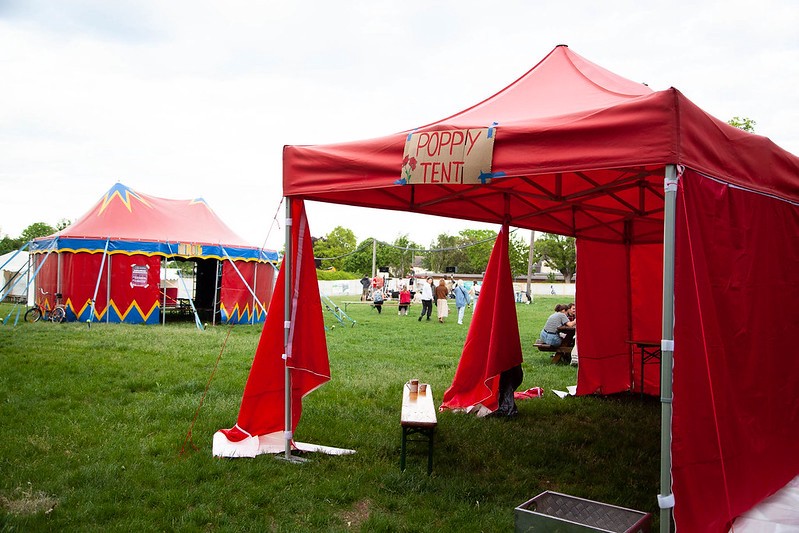
    The “Poppy Tent” at climate camp Vienna, in which this workshop happened. Photo: ©Doris Fazekas

    Tending to own needs is generative beyond self

    The effects go beyond personal benefit. There is something extremely generative about tending to ones own needs. When someone does it, they are naturally more supportive of others doing the same, they are in a better position to hold space for those around them, because they are more resourced and there is something inspiring about people that take their needs seriously.

    Clarity on needs opens up possibility

    There are some boundaries to this “individual agency” approach though. There are a lot of circumstances and systems that stand in the way of us fulfilling our need in the way that we need to. (Please forgive me for the over-extensive use of the word need). For example the desire to live in an intact ecosystem is being made more and more impossible by extractive practices that lead to biodiversity loss and degradation of ecosystems. This where the personal need turns into a political position on the societal stage. One might choose to act out that desire by becoming a climate activist, or by working toward living off a plot of land and regenerating it. There are so many ways to satisfy a need when we are clear on what it is. Political positions for the sake of having one, because that is what you do, are more of an intellectual exercise and are restrictive more often than not.

    There are very personal reasons for doing the stuff we do “out there in society”. Owning those reasons empowers us to make choices on how to act on them with a lot more clarity and be more effective in bringing about positive change and living a meaningful and fulfilled live at the same time.

    And when we can find the right people to walk this walk with, a need for connection and community might automatically be satisfied in the process.

    The “Poppy Tent” at climate camp Vienna, in which this workshop happened. Photo: ©Doris Fazekas

    No “right” theory of change

    Another thing I (re-)learned was, that everyone has their theories about how we should best go about making positive change happen: through education, tackling economic inequality, raising awareness to reach a critical mass of people around a topic, applying pressure on institutions, solving problems through self-organized direct action, slowly titrating (the process of slowly dripping an alkaline solution into an acid to neutralize it or vice versa) different ways of doing stuff into society to not scare anyone off. I can vividly remember a lot of these proto-theories of change being “the shit” for me at some point. I would get super excited that I found “the solution” and try to convince everyone around me that this was “the way”, then get a bit frustrated because I realized this approach also had limitations, coming across another “the shit” — rinse and repeat. The very loud and clear lesson from the workshop yesterday was: all of them are important. Don’t waste any energy on trying to convince people of your approach to change. Just go do it for a while, see what you can learn and how your perspective on change changes through following one path for a while. It can always change according to what you see, but it is never “lost time” or “heading in the wrong direction” — as long as you don’t do any intentional or reckless harm to others and are willing to own your mistakes of course.

    If you found this interesting but are wondering what the hell to do with it or where and how to start getting clear on your needs — please reach out to me, I’d love to have a conversation with you!

  • Key Learning’s from the Microsolidarity Gathering

    Key Learning’s from the Microsolidarity Gathering

    Last week I had the absolute privilege and pleasure to attend a gathering of changemakers, community-builders, coaches, space-holders and generally awesome people in Belgium. The experience was made possible by everyone who was there and was organized by Richard D. Bartlett and Nati Lombardo (thehum.org). In this article I want to share my key takeaways and learnings from a week of learning about microsolidarity, community, belonging, hosting and myself. I won’t go into any detail about what microsolidarity is, Rich has a series of essays over here where he introduces the concept.

    This is a collection of some pieces of insight, remixed from the inputs of Rich, Nati and Karl, the interactions with other’s there, open space sessions and what came to me in quite time. A lot of it is not my own thinking but what I got from others. I try to give credit whereever possible, let me know if I got something wrong or you find your own brilliant thoughts in here and I haven’t given you credit! There is no particular order to the paragraphs, a lot of them overlap or describe a similiar thing from a different angle, but this is what I have to say and feels valueable to share at the moment.

    If I had to name one single most valuable “corner-stone” learning it would be this:

    To build communities and ultimately a society where everyone’s needs are met, everyone needs to be able to express their needs, to hear those of others, be committed to look for the overlap and celebrate the differences with creativity.

    Self-Connection is a Skill

    This means you can get better at it with practice and the right tools. It also means it is not trivial to be connected to ones own needs. The default behavior from dominant culture is to suppress some “undesirable”, “unacceptable” or “insufficient” parts of ourselves. Dominant behavior in the outer is a reflection of dominant behavior toward oneself. I can not treat you with compassion and have empathy for your needs if I am not able to do so for myself. Therefore practicing self-connection is a hugely important contribution toward around us.

    I took all the pictures in this article at the venue of the retreat: The old Abbey of Drongen, a Monestary that has been around for about 900 years. They are there for vibes only and have no semantic function. May you enjoy their sight 🙂

    Social Fabric and Meaningful Connections

    Social fabric is the magic substance that is created when we drop the bullshit, stop pretending and are real with each other. It is what emerges from a bunch of meaningful connections. Meaningful connections happen when we support each other in getting out needs met. This requires being able to express our needs and hear those of others. Meaningful connections can happen in an instant under the right conditions. Social fabric requires repetition, care for the connections and a sufficient density of connections. You know that social fabric is strong when it can hold conflict and disagreement.

    Conditions for Meaningful Connections

    At the gathering it was remarkably easy to drop into meaningful connections with people I had just met. This was because Rich and Nati and the rest of the hosting team had put a lot of thought and experience into creating the right conditions. They had created a lightweight but very thought-out set of boundaries and structure that helped everyone to relax and become present quickly. One quote that really made the ides of rules, boundaries and structure in community click for me was this:

    The function of the boat is where the boat is not. 
    – Lucas Tauil

    This means: the function of a boat is not to be a hull and a mast and a rudder. It is to displace water and float so that on the inside there is space for people to live and stuff to happen. Similarly the function of setting up boundaries around a community is not to have boundaries, but to enable everyone on the inside to engage in meaningful interactions and be present, because they can feel safe and know what to expect. The idea of a minimum viable structure really stuck with me: what is the absolute least amount of structure that we need in order for everyone to be able to express their needs, conflicts to be resolved gracefully and transformatively and the community to fulfill it’s purpose?

    I took all the pictures in this article at the venue of the retreat: The old Abbey of Drongen, a Monestary that has been around for about 900 years. They are there for vibes only and have no semantic function. May you enjoy their sight 🙂

    Belonging

    Belonging is the feeling of being in the right place with the right people. Having what is needed by others and being able to provide it freely and happily. Being able to express what you need and having your needs met by those around you. Giving and receiving without worrying about the plumbing (as Jhonson Hsieh brilliantly put it). Breathing as one, being held crying in joy or anguish, holding what needs holding, just because we know there is something more real and important underneath what we can see on the surface. Something deeply authentic and special that each of us has to offer and that wants to come out and be expressed, wants to grow and thrive. Belonging is where it can, where we support each other so it is able to. 
    Belonging.
    The place where you are longing to be. 
    Having an idea and realizing that just the right people are here and there is just enough time to make it happen in that moment. And then making it happen. 
    Not having to hold back any authentic part of yourself and seeing no need to do anything but show up authentically.

    Expressing Needs

    I have written a lot about expressing needs and getting them met in a community so far. But I want to riff on this again for a second by telling a story from my way back to Vienna after the gathering. I had to change trains in Aachen and had an hour to get dinner. I walked out of the train station, past a person sitting on the floor begging, barely noticing them, crossed the street and entered a Kebab place. As I entered I realized there was a very tense atmosphere, a woman at the counter and the two men behind it were having some kind of disconnect. Suddenly the woman grabbed a kebab sandwich on the counter that had apparently been prepared for her and left the store. The two men behind the counter were startled, one walked after her half heartedly, complaining that she hadn’t paid. When I sat down to eat he complained to me: “I get it, she’s hungry and doesn’t have money. But why does she treat us like this, not being honest? If she had told us: ‘I’m hungry but don’t have any money’ it would have been no problem, she could have eaten anyway. But ordering as usual and then running away with the food… what is this?”. I agreed that it was not a great way for her to get her need met and at the same time felt compassion for her situation. She was probably ashamed top directly ask or afraid that her request would not be granted (side note: this is probably because there was no social fabric between them, they were strangers to each other).

    After I finished eating I still had some time to pass so I got a drink and sat down on the plaza in front of the train station. As I watched the diverse crowd that was hanging out there, the begging person that I had walked past without really noticing them, came up to me and very kindly said: “Do you maybe have 20 cents? I haven’t eaten yet and I am really hungry. I’ve been sitting in front of the train station for 2 hours but no one would give me any money”. The way that they looked at me and revealed their need to me, making a completely reasonable request, allowed me to look with in myself: do I right now have the capacity to support this person in having their needs met? I did and gave them two euros. They thanked me very kindly, I wished them well and wandered of to another group of people, where they made the same request and also got some money. I felt good after this interaction. I was able to support someone whilst keeping the integrity of my own needs.

    A couple minutes later it was time to get on the next train. After we had left the station, a woman came in and sat down opposite of me. She looked vaguely familiar out of the corner of my eye so I looked closer: it was the woman that had run off with her free kebab. She seemed to recognize me too and looked away shamefully. I thought about how I could let her know that there would have been another way to get what she wanted, that would have left both the kebab people and herself feel good and cared for, instead of taken advantage of and shameful. Before I could say anything though she got up and found another seat across the aisle.

    The difference in the way that these two people went about getting the exact same need met, struck me as a very coachable moment. The begging person was for one reason or another able to express what they needed truthfully and authentically, got what they needed and we both left the interaction feeling (or at least seeming to feel) great. This is a way of living in partnership. The woman in the kebab shop chose to be sneaky. She also got what she wanted but everyone involved left the interaction feeling shitty. This is a way of interacting in a domination paradigm (“I (the kebab lady) won’t get what I want from the ones higher up the hierarchy (kebab place guys) so I need to trick them into giving it to me and dominate them in return”).

    I took all the pictures in this article at the venue of the retreat: The old Abbey of Drongen, a Monestary that has been around for about 900 years. They are there for vibes only and have no semantic function. May you enjoy their sight 🙂

    Collective Agency requires Social Fabric

    This means we can not collaborate to solve the problems of our time unless there is some social fabric between us. The stronger and more resilient the fabric is, the easier and more fun it is to work on really hard problems like: How do transition out of fossil energy in our community? How can we increase our food sovereignty? How do we make sure everyone has access to affordable housing? 
     → i.e. the material conditions of society that will have to change pretty soon if we want to hang around this planet for much longer. 
    Since there is a lot of resistance to change and inertia in the system, these challenges are hard to solve.

    • There will be conflict and disconnect at times in any group going about tackling them.
    • We will need support to find our place in the struggle.
    • We will need to grow to have the skills to make any meaningful impact.
    • We need a sense of belonging to stay happy and healthy through these physically, mentally and emotionally challenging processes.

    Social fabric is what provides this on different scales (read on).

    Literacy of Scales

    Microsolidarity is fractal. It assumes the same principles can support us on different scales of community, from the self, through dyad, crew and congregation all the way to the broad network. Rich kept mentioning through out the retreat, that the one thing that he wants people to walk away with, is literacy of scales, i.e knowing what scale of community is good at doing what. Right until the end of the week I kept thinking: “when are we going to get to that part?” It was only on the way home that I realized that this is the kind of thing that you learn through lived experience more so than through a lecture. I’ll offer some very short takeaways anyway:

    • Conflict between 3 people does not need to be restored in a circle of 36. It is just very uncomfortable for the 33 people who are not involved.
    • Dyads (two people) are great great great for getting support with deep inner work and an awesome space for creative co-creation of a workshop outline.
    • Small groups (3–7 people) are amazing for sharing knowledge, giving each other feedback, aligning perspectives on a thing that happened, creative conversation, supporting each other through light disconnect.
    • big groups (10 upwards) are great for games, dance, mixing and matching of needs and resources, cuddle puddles (although these might work at smaller scales too 😉
    I took all the pictures in this article at the venue of the retreat: The old Abbey of Drongen, a Monestary that has been around for about 900 years. They are there for vibes only and have no semantic function. May you enjoy their sight 🙂

    Meetings are important

    “Meetings are the primary ritual of collective agency”
    -Jen Sandler

    While social fabric is a necessary pre-condition for making stuff happen, meetings are how we do that. Being good at meetings is very important if we want to make the world a better place. This sounds obvious but this spin on just how important meetings are really sparked something in me. Thanks Jen for the amazing open space session!

    Compassion is key!

    To weave social fabric and cultivate a sense of belonging practicing compassion for the parts of us as well as other people that have “divergent needs” is crucial. Compassion it was turns seemingly incompatible opposites that seem like a dead end road into a garden of opportunity in which we can creatively explore next steps that serve everyone involved.

    Precise appreciation is powerful

    Nothing is more effective to deepen meaningful connections and create a sense of belonging than precise appreciation. I learned this from Karl Steyaert (who did a big part of the input on inner work, self connection and conflict resolution and you should definitely check out if you are not familiar with him). Precise appreciation works like this:

    • Someone did something you appreciated.
    • What need did you have and how did they meet that need so that you appreciate them for what they have done?
    • Tell them in as concrete terms as possible, they will feel seen in their brilliance and greatness.
    I took all the pictures in this article at the venue of the retreat: The old Abbey of Drongen, a Monestary that has been around for about 900 years. They are there for vibes only and have no semantic function. May you enjoy their sight 🙂

    So much more…

    It feels like I could keep going for ever but this is a post on my “key learning’s” not all my learning’s 😉

    Special thanks to Rich, Nati, Karl, Jocelyn and Lana who where the hosting team and created a safe container for a one of a kind experience that I will never forget! An equally huge thanks to everyone else who was there and contributed to my learning (you all did ;).

    Let me know what resonated, what you see different, any thoughts that this sparked in the comments, via email on twitter or instagram 🙂

  • Transformation Post May 2022

    Transformations-Post Mai 2022

    english version

    In dieser Ausgabe der Transformationspost gibt es einen kleinen inhaltichen Schwerpunkt auf zwei Themen die mich gerade sehr beschäftigen und die super zusammenpassen: Ich bin gerade total fasziniert von Emergent Strategy – der Idee, dass Strategie aus relativ einfachen Interaktionen ganz natürlich hervorgeht, wenn wir unsere Aufmerksamkeit auf tiefe, stabile Beziehungen richten. Gleichzeitig bin ich auf eine Community Building Praktik Namens Microsolidarity gestoßen. Dort geht es ganz ähnlich wie bei Emergent Strategy darum Veränderung aus der Perspektive einer kleinen und resilienten Gruppe zu denken, die in ein größeres Netzwerk eingebunden ist und sich darüber klar zu werden, welche Funktionen verschiedene Ebenen und Gruppengrößen in einer Gemeinschaft übernehmen. Zu den beiden Themen gibt es jeweils mehrere Artikel bzw. ein Buch und Podcasts. Außerdem gibt es eine Podcast Folge über weiße Dominanzkultur, einen Workshop zur politischen Dimension persönlicher Visionen, ein Paper über “Complexity Leadership Theory”, #lobaubleibt Infos, Ressourcen zum Thema solidarische Landwirtschaft, dem Klimarat und einer Moderationsmethode mit dem Namen “Dynamic Facilitation”. Lass mich wissen wenn du irgend einen Inhalt aus dieser Ausgabe besonders spannend fandest, dich austauschen willst oder dich ähnliche Dinge gerade beschäftigen!

    Veranstaltungen

    10.05.Joana Macy und Jonathan Gustin: Climate Change as Spiritual Practice  
    Am 10. Mai gibt Joana Macy einen online Workshop mit dem Titel “Climate Change as Spiritual Practice”. Es geht um die Frage, wie wir Angst und Anspannung im Angesicht der Klimakrise in Empowerment umwandeln können und welchen Praxen uns in dieser ungewöhnlichen und intensiven Zeit unterstützen können. https://www.purposeguides.org/…
    24.05. – Das Private ist politisch – Visionen für ein gutes Leben für alle entwickeln
    Am 24. Mai gebe ich auf dem Klimacamp bei Wien einen Workshop mit dem Titel “Das Private ist politisch – Visionen für ein gutes Leben für alle entwickeln”. Wir erkunden gemeinsam unsere persönlichen Vorstellungen davon, was “das gute Leben für alle” für das so viele von uns einstehen, für uns konkret bedeuten würde. Wie wäre unser Leben, in dieser Vision? Wie motiviert diese Vision unsere politische Arbeit? Und wie können wir jetzt damit anfangen, aus dieser Vision heraus zu leben, anstatt sie als fernes Ziel in der Zukunft zu sehen? Damit beschäftigen wir uns am 24. Mai um 15:00 auf dem Klimacamp bei Wien. Mehr Infos findest du auf der Website des Klimacamps. https://klimacamp.at
    28.05. – Großdemo zum SPÖ Parteitag in Wien
    Die Bewegung schreibt: “Trotz massiver Proteste gegen Lobau- und Stadtautobahn halten Michael Ludwig, Ulli Sima & Co an der Lobau-Autobahn fest. Deshalb gehen wir am 28.5., dem Parteitag der SPÖ Wien, zu Tausenden zum Parteitag auf die Straße und kippen dieses Projekt – für ein gutes Leben für alle!” https://lobaubleibt.at/aktions…
    17.-19.06. – Tipping Points #7 – Skills und Methoden für Soziale Bewegungen
    Im Juni findet in Innsbruck die 7. Ausgabe des Workshopwochenendes Tipping Points statt. An diesem Wochenende geht es rein um Methoden und Fähigkeiten, die nützlich für die Arbeit in sozialen Bewegungen sind. Diesmal ist der Themenschwerpunkt “Hands on – Direct Action und politische Arbeit abseits von Protest”. Das Programm ist fertig und die Anmeldung ist seit dieser Woche offen. Beides findest du auf tippingpoints.life.

    Artikel, Bücher und Texte

    Richard D. Bartlett – Microsolidarity Essays
    In 5 kurzen Texten erläutert Richard D. Bartlett seine Community-Building Methode “Microsolidarity”. Die grundlegende Idee ist, Gemeinschaft und gegenseitige Unterstützung in kleinen Gruppen zu organisieren und gemeinsam vertrauensvolle Beziehungen zu schaffen und schließlich als Gruppe wirksam in der Welt zu handeln.
    adrienne maree brown – Emergent Strategy
    In Emergent Strategy beschreibt adrienne maree brown elemente und prinzipien “emergenter Strategie”. Im Gegensatz zu “klassischer” Strategie, die einen rationalen Planungsprozess darstellt und eine imperiale, koloniale und militärische Geschichte hat, geht es bei emergenter Strategie darum sich auf relativ einfache Interaktionen zu konzentrieren, Beziehungen zu vertiefen und ein resilientes Netzwerk zu schaffen in dem viele Akteur*innen miteinander verbunden sind. Aus den Interaktionen in diesem Netzwerk ergibt sich dann die Strategie als emergentes Phänomen. 
    Benyamin B. Lichtenstein et al – Complexity Leadership Theory
    In diesem Paper stellen die Autoren die These auf, das Leadership nicht etwa eine Eigenschaft einzelner Personen ist oder eine Tätigkeit die ausgeführt wird, sondern vielmehr ein emergentes Phänomen, das aus der Interaktion verschiedener Akteur*innen entsteht und das somit inhärent dezentral ist. Sehr passend zum Buch “Emergent Strategy”. 
    Lobau Bleibt Zeitung
    Die #lobaubleibt Bewegung hat die zweite Auflage ihrer Zeitung produziert, die in ganz Wien verteilt wird. Außerdem gibt es sie online zu lesen. Es geht unter anderem um die Fragen “Wer profitiert von der Stadtautobahn?”, “Wo wären wir heute, wenn immer alle gehorsam gewesen wären?” und eine feministische Perspektive auf den Kampf gegen die Stadtautobahn.
    Argumente und Annahmen im Streit um die Stadtautobahn
    Passend zum Thema #lobaubleibt schicke ich dir noch einen Artikel, den ich Anfang Februar geschrieben haben, nachdem eine besetzte Baustelle für die Stadtautobahn geräumt wurde. Darin versuche ich aus den Argumenten beider Seiten des Konflikts (Stadtregierung und Lobaubleibt Bewegung) die zugrundeliegenden Annahmen herauszuarbeiten.

    Ressourcen

    Solawi Leben
    Auf https://solawi.life findest du eine Datenbank aller Solidarischen Landwirtschaften in Österreich. Wenn du dich fragst, wie du deine Lebensmittelversorgung noch ein bisschen besser gestalten kannst, dann schau doch mal ob es in deiner Nähe auch eine Solawi gibt. Das Äquivalent für Deutschland gibt auf https://solidarische-landwirts…
    Dynamic Facilitation
    Dynamic Facilitation ist eine super spannende Methode zum Anleiten komplexer Gruppengespräche, in denen vielleicht noch gar nicht ganz klar ist, was das Problem ist. Sie wird genutzt um in Österreich die Bürger*innenräte durchzuführen. https://dynamicfacilitation.or…
    Klimarat
    Momentan findet in Österreich der erste Klimarat statt. Dieser ist aus dem Klimavolksbegehren 2020 hervorgegangen. In verschiedenen Beteiligungsprozessen erarbeiten zufällig ausgewählte Bürger*innen Lösungsvorschläge, wie Österreich bis 2040 klimaneutral werden soll. Auf der Website finden sich ausführliche Infos und Dokumentationen zum Prozess und den Ergebnissen. https://klimarat.org

    Podcasts und Videos

    Dismantling White Supremacy Culture with Natalie Davenport
    In der letzten Ausgabe meines Podcasts “Shift” unterhalte ich mich mit Natalie Davenport über ihre Arbeit am Abbau der weißen Dominanzkultur. Natalie ist eine Facilitatorin, Coach, Aktivistin und Organizerin aus den USA. Sie berichtet uns, was weiße Dominanzkultur ist, wie sie sich in der Gesellschaft und in Organisationen widerspiegelt, was Konflikte in sozialen Bewegungen damit zu tun haben und warum es wichtig ist ihr entgegen zu wirken. https://cba.fro.at/549599
    Richard D. Bartlett über Self-Organizing Collaboration
    Wem die Microsolidarity Essays vom Anfang des Newsletters zu lang sind, dem empfehle ich dieses Interview mit Richard D. Bartlett. Darin beschreibt er sehr anschaulich, wie er Community Building praktiziert und welche verschiedenen Ebenen von Beziehung es dafür braucht. Ich finde diesen Ansatz spannend, da er so niederschwellig und zugänglich ist. https://www.jimruttshow.com/rich-bartlett/
    Emergent Strategy Season 2
    Der Emergent Strategy Podcast geht in die zweite Staffel. In der ersten Folge der Staffel und 5 Jahre nach dem Erscheinen des Buches “Emergent Strategy – shaping change, changing worlds” ziehen die Hosts Sage Crump, Mia Herndon und adrienne maree brown Bilanz: wie hat sich die Arbeit mit Emergent Strategy auf ihre Leben und soziale Bewegungen ausgewirkt? Wie soll es weiter gehen? Der Podcast ist sehr empfehlenswert um einen Eindruck von Emergent Strategy und den Menschen dahinter zu bekommen. Die Hosts interviewen Gäste zu ihren Perspektiven auf Emergent Strategy und die Art und Weise wie ihre Arbeit in ihren spezifischen Feldern sich damit verknüpfen lässt. https://open.spotify.com/episo…

    Puhh, das war ganz schön viel. Ich hoffe es war etwas für dich dabei! Wenn dir die Transformationspost gefällt und du mich unterstützen willst, dann überleg doch mal, wem dieses Angebot noch taugen könnte und lade die Person dazu ein. Du kannst einfach diesen Link verschicken, für einen Überblick über die bisherigen Ausgaben und das Anmeldeformular: https://jonasgroener.com/newsletter
    Alles liebe Jonas

    Transformation Post May 2022

    this translation is machine generated, if it sounds a bit funny, that is why 😉

    In this issue of the Transformation Post there is a small content focus on two topics that I am very busy with right now and that fit together super well: I’m totally fascinated by Emergent Strategy right now – the idea that strategy emerges naturally from relatively simple interactions when we focus our attention on deep, stable relationships. At the same time, I came across a community building practice called Microsolidarity. There, very similar to Emergent Strategy, it’s about thinking about change from the perspective of a small and resilient group that is integrated into a larger network, and being clear about what functions different levels and sizes of groups play in a community. There are several articles or a book and podcasts on each of these two topics. There is also a podcast episode on white dominance culture, a workshop on the political dimension of personal visions, a paper on “Complexity Leadership Theory“, #lobaubleibt info, resources on solidarity agriculture, the climate council, and a facilitation method called “Dynamic Facilitation“. Let me know if you found any content from this issue particularly exciting, want to share, or similar things are on your mind right now!

    Events

    10.05Joana Macy and Jonathan Gustin: Climate Change as Spiritual Practice
    On May 10, Joana Macy will give an online workshop called “Climate Change as Spiritual Practice.” It is about how we can transform fear and tension in the face of the climate crisis into empowerment and what practices can support us in this unusual and intense time. https://www.purposeguides.org/…
    24.05. – The private is political – developing visions for a good life for all
    On May 24, I will be giving a workshop at the Climate Camp near Vienna entitled “The Private is Political – Developing Visions for a Good Life for All.” Together we will explore our personal visions of what “the good life for all” that so many of us advocate would mean for us in concrete terms. What would our lives, in this vision, be like? How does this vision motivate our political work? And how can we start living out of that vision now, rather than seeing it as a distant goal in the future? This is what we will be addressing on May 24 at 15:00 at the Climate Camp near Vienna. More info can be found on the climate camp website. https://klimacamp.at
    28.05. – Big demonstration to the SPÖ party congress in Vienna
    The movement writes: “Despite massive protests against Lobau and city highway, Michael Ludwig, Ulli Sima & Co stick to the Lobau highway. That’s why on 28.5., the party congress of the SPÖ Vienna, we will go to the party congress in the thousands on the street and overturn this project – for a good life for all!” https://lobaubleibt.at/aktions…
    17.-19.06. – Tipping Points #7 – Skills and Methods for Social Movements
    In June, the 7th edition of the workshop weekend Tipping Points will take place in Innsbruck. This weekend is purely about methods and skills useful for working in social movements. This time the main topic is “Hands on – Direct Action and political work away from protest”. The program is ready and registration is open as of this week. You can find both at tippingpoints.life.

    Articles, books and texts

    Richard D. Bartlett – Microsolidarity Essays
    In 5 short essays Richard D. Bartlett explains his community-building method “Microsolidarity”. The basic idea is to organize community and mutual support in small groups and to create trusting relationships together and finally to act effectively as a group in the world.
    adrienne maree brown – Emergent Strategy
    In Emergent Strategy, adrienne maree brown describes elements and principles of “emergent strategy”. In contrast to “classical” strategy, which is a rational planning process with an imperial, colonial and military history, emergent strategy is about focusing on relatively simple interactions, deepening relationships and creating a resilient network in which many actors are connected. Strategy as an emergent phenomenon then emerges from the interactions in this network
    Benyamin B. Lichtenstein et al – Complexity Leadership Theory
    In this paper, the authors argue that leadership is not a property of individuals or an activity that is performed, but rather an emergent phenomenon that arises from the interaction of various actors and is therefore inherently decentralized. Very pertinent to the book “Emergent Strategy”
    Lobau Bleibt Newspaper
    The #lobaubleibt movement has produced the second edition of its newspaper, which is distributed throughout Vienna. It is also available to read online. Among other things, it addresses the questions “Who benefits from the urban highway?”, “Where would we be today if everyone had always been obedient?” and a feminist perspective on the fight against the urban highway
    Arguments and assumptions in the urban freeway controversy
    In keeping with the theme of #lobaubleibt, I’m sending you another article I wrote in early February after an occupied construction site for the urban freeway was cleared. In it, I try to tease out the underlying assumptions from the arguments of both sides of the conflict (city government and the Lobaubleibt movement)

    Resources

    Solawi Life
    At https://solawi.life you can find a database of all Solidarity Farms in Austria. If you’re wondering how you can make your food supply a little better, check out if there’s a Solawi near you. The equivalent for Germany is available at https://solidarische-landwirts
    Dynamic Facilitation
    Dynamic Facilitation is a super exciting method for guiding complex group conversations where it may not be clear what the problem is. It is used to conduct citizens’ councils in Austria. https://dynamicfacilitation.or…
    Climate Council
    At the moment the first climate council is taking place in Austria. This has emerged from the climate referendum 2020. In various participation processes, randomly selected citizens are working on solutions for Austria to become climate neutral by 2040. The website provides detailed information and documentation on the process and the results. https://klimarat.org

    Podcasts and videos

    Dismantling White Supremacy Culture with Natalie Davenport
    In the latest edition of my podcast, Shift, I talk with Natalie Davenport about her work on dismantling white supremacy culture. Natalie is a facilitator, coach, activist and organizer from the US. She tells us what white dominance culture is, how it is reflected in society and organizations, what conflicts in social movements have to do with it, and why it is important to counter it. https://cba.fro.at/549599
    Richard D. Bartlett on Self-Organizing Collaboration
    If the Microsolidarity Essays from the beginning of the newsletter are too long for you, I recommend this interview with Richard D. Bartlett. In it he describes very clearly how he practices community building and what different levels of relationship are needed for it. I find this approach exciting because it is so low-threshold and accessible. https://www.jimruttshow.com/rich-bartlett/
    Emergent Strategy Season 2
    The Emergent Strategy Podcast is entering its second season. In the first episode of the season and 5 years after the release of the book “Emergent Strategy – shaping change, changing worlds” hosts sage crump, mia herndon and adrienne maree brown take stock: how has working with Emergent Strategy impacted their lives and social movements? Where do they want to go from here? The podcast is highly recommended to get a sense of Emergent Strategy and the people behind it. The hosts interview guests about their perspectives on Emergent Strategy and the ways their work in their specific fields connects to it. https://open.spotify.com/episo…

    Phew, that was quite a lot. I hope there was something for you! If you like the transformation post and want to support me, think about who else this offer might be good for and invite that person to it. You can simply send this link for an overview of the previous issues and the registration form: https://jonasgroener.com/newsletter
    All the best Jonas
  • #4 [english] – Turning a Work-Place into a Purpose-Place with Mazin Jamal

    In this episode, I have the absolute privilege of talking to Mazin Jamal. Mazin is a fellow coach trained by the academy for coaching excellence, a trainer, author, artist, musician, activist, and thought leader in building a world where everyone can thrive. He is the founder and executive director of Holistic Underground – an organization that supports social movements and companies to bring principles of Justice, Equity, Diversity, and Inclusion to their work.

    In this conversation, Mazin tells us about his theory of change, the methodology Holistic Underground works with to train movements and organizations in JEDI principles which is called “purpose place”, some organizational shifts toward self-organization and distributed leadership they are going through at the moment, his perspective on transformative justice, and a recent trip to Sudan, where he visited his family there and got to support the local revolution and resistance against the military coup that is happening there.

    Links

    Find more about Mazin’s work at https://mazinjamal.com or his Instagram @mazinjamal_

    You can learn more about the programs and training that Holistic Underground offers and get in touch with them if you are interested in working with together at https://holisticunderground.org.

    If you want to stay up to date with this podcast or what I am up to, you can subscribe to my newsletter at jonasgroener.com/newsletter or follow me on Instagram @jonasgroener

    Resources mentioned

    The Ready is an organization that is working on designing and transforming organizations: https://theready.com/

    The OS Canvas is a tool developed by The Ready to better understand and re-design organizations. You can read about it here https://medium.com/the-ready/the-operating-system-canvas-420b8b4df062

    Holacracy is a governance model for the self-organization of big groups. You can check it out here https://www.holacracy.org/.

    Essentialism by Greg McKeown is a book about focusing on the really important things to be more successful in them. You can listen to the author introducing his book here https://www.youtube.com/watch?v=T9x6D09AKBU

  • Regenerative Nahrungsmittel System Ressourcen

    Transformation des Nahrungsmittel Systems

    Auf dieser Seite sammle ich Ressourcen rund um das Thema regenerative Nahrungsmittel.

    • solawi.life ist das Netzwerk der solidarischen Landwirtschaften in Österreich. Dort findest du ein Register aller solidarischen Landwirtschaften in Österreich.
    • Auf foodcoops.at gibt es eine Datenbank aller Foodcoops (Einkaufsgemeinschaften) in Österreich.
    • solidarische-landwirtschaft.org ist das Netzwerk der solidarischen Landwirtschaften in Deutschland. Auch dort gibt es eine Karte und eine Datenbank aller Solawis.
    • urgenci.net ist ein europäisches Netzwerk, aus Initiativen, die im Bereich Nahrungsmittel-Souveränität arbeiten.
    • Auf usdalocalfoodportal.com gibt es eine Datenbank von lokalen Nahrungsmittel-Produzent*innen, Solawis (CSA’s) und weitern Möglichkeiten zum direkten Bezug von Nahrungsmitteln
  • #3 [english] – Dismantling White Supremacy Culture with Natalie Davenport

    Natalie Davenport is a facilitator, organizer and coach. She is based in the United States and all of her work is rooted in the purpose of supporting people to participate in building the new world with ease and joy and a sense of belonging. As a coach Natalie supports people to clarify their vision for change and to consistently take action. Recently she has been focusing her energy on dismantling white supremacy culture through an array of offerings, from interviews on instagram live to a 3 month study group. Today we will be talking about what white supremacy culture is, how it shows up in our organizations and society as a whole, how it relates to widespread conflict in social movements and why it is important to dismantle it.

    Ressources mentioned by Natalie

    Natalie’s Coaching Website https://nataliedavenport.carrd.co/and Instagram https://www.instagram.com/nataliexeilatan/

    Beyond White Supremacy on Instagram https://www.instagram.com/beyondwhitesupremacy/

    The Website based on the document “Characteristics of White Supremacy Culture” by Tema Okun https://www.whitesupremacyculture.info/

    adrienne maree brown https://adriennemareebrown.net/and her book “We Will Not Cancel Us” https://www.akpress.org/we-will-not-cancel-us.html

    Clementine Morrigan and her zine “Fuck The Police Means We Don’t Act Like Cops To Each Other” https://www.clementinemorrigan.com/product/fuck-the-police-means-we-don-t-act-like-cops-to-each-other

    Ressources mentioned by Jonas

    Daniel Schmachtenberger and his thinking on “Generator Functions of Existential Risk” https://futurethinkers.org/daniel-schmachtenberger-generator-functions/

    Joana Macy and Molly Brown and their book “Coming Back To Life” https://workthatreconnects.org/resource/coming-back-to-life-the-updated-guide/and “The Work That Reconnects” https://workthatreconnects.org/

    Jonas’ newsletter https://jonasgroener.com/newsletter, coaching website https://jonasgroener.com/and Instagram https://instagram.com/jonasgroener