
Author: Jonas

  • Engaging Interpersonal Tension and Conflict for Connection

    This article is part of the series “Learnings from the Embodying Collective Transformation Residency”. You can find an overview of all posts in that series and an intro to the topic here.

    One thing that is guaranteed to happen when you live in community for any amount of time, is interpersonal tension. There are always going to be some parts of you that react strongly to what someone else does or says. There is very likely also going to be a part of you, that wants to be polite and not immediately start a fight because of that. In this dynamic, there is tension within yourself and tension between you and someone else. At this stage, although maybe a bit uncomfortable, tension is fairly easy to address. If the “polite” part is too dominant though, the part that has a strong reaction to what someone else does or says might “go underground” (thanks Karl for this beautiful picture). This means it is off the radar of your conscious awareness, yet still active. The next time someone does something this part has a strong reaction to, it might come back even more forcefully and the polite part might not be able to tame it – you might say or do things that are in turn upsetting to the other person. Now we have conflict and it requires much more effort to transform than at the stage of tension.

    Consciously engaging interpersonal tension can be really connecting

    While my conditioning lets me default more towards conflict avoidance and keeping up “harmony”, this month I’ve experienced the power of engaging tension head-on. When I say “head-on”, I mean starting with my side of the tension. The first step is always to look at what gets activated in me. How am I feeling? What need do I have, so that what happened in physical reality makes me feel like that? Once I can gain some distance to my feelings (in IFS lingo: once I’ve unblended from my parts) and am able to engage the parts that got activated with compassion and curiosity I might find surprising answers to the above questions.

    For example, I had tension in relationship with someone that was very chatty and did not react to my subtle cues that I need to leave because I have a meeting one day a few weeks ago. I politely stayed to wait till the conversation came to a natural stopping point, where I didn’t have to interrupt the person to mention again, that I’m really sorry but I have to go now. Afterward, I was furious. The conversation that was going on inside sounded something like this:

    “How can they be so inconsiderate and insensitive to my hints? I’ve been listening to them so much and they just keep taking up space, without even appreciating it!”

    A few hours went by and some other things happened, that seemed to just reinforce my conclusion, that this person was an inconsiderate “taker” and that I had nothing to expect in return but to feel taken advantage of. When I finally surrendered to the fact, that I needed to do something about this, the first step was to get support in identifying, what was going on “on my side of the street”. A friend held space for me and guided my exploration of my inner landscape for half an hour and what came out the other end sounded entirely different:

    There is a part of me, that believes, that I will be pushed away and will no longer belong if I state too strongly what I need (like leaving, to go to a meeting). This part can get really dominant and hijack my system with people-pleasing behavior. There is also a part, that is tracking how balanced giving and receiving in a relationship is. It has a need for balance, reciprocity, and appreciation. When this part doesn’t get its needs met, it gets really angry and finds lots of mean things to say about the other person. In this case, the people pleaser was the one who prevented it from having its needs met. I can support the people pleaser to feel safe enough, so that it allows the need for appreciation and balance to be voiced, by expressing to the other person, how much I care about our relationship being healthy and unblocked as a first step in having this conversation. I can support the part that longs for balance to relax, by expressing this need to the other person and explaining how this dynamic got activated, and asking them, if it is okay for them if next time we are in a conversation and I need to leave, I just interrupt them.

    After having seen all of this complex dynamic and all of my parts having had space to express how they feel and what they need, I felt ready to take it to the other person. We went on a walk, and I shared what was alive for me. It was received with understanding and care and the tension within me and between us was gone.

    Imagine, how different, this conversation would have gone, if I had engaged them with the story I had in my head before receiving support or if I had waited another day for the tension to build up!

    The essence of this lesson for me was: engage tension, but do it from a place of clarity, compassion, and curiosity, rather than anger and frustration. This might require getting support from someone else first.


    Transforming Conflict can be A LOT of Work

    … but this is the work that we need to do.

    Depending on the depth of the triggers touched, it can require a whole community to engage in different aspects of a conflict transformation (or in other words transformative justice) process: to support the people directly involved, to support those who are touched secondarily, to support those who support. It can take a long time till there is a sense of resolution. The process is non-linear and might take unexpected twists and turns as new pain points get touched in people as others are dealt with. It might seem like resolution and reconciliation has been achieved one day, only to discover that there is still energy and pain present in people that need attention and support.

    Conflict and tension are never absolute

    Even while a conflict is active it is possible to relate. There is a place within us from which we can extend compassion toward someone we are in conflict with. Being able to do this is both useful for resolving the conflict and for having some time off. Urgency does not help, so take it slow, and have some fun in between if possible. Get a glimpse of what is there outside of tension and conflict.

  • Container Design for Psychological Safety and Trust

    This article is part of the series “Learnings from the Embodying Collective Transformation Residency”. You can find an overview of all posts in that series and an intro to the topic here.

    The whole idea behind events like the Embodying Collective Transformation residency is to create a social container, in which people can experience enough safety and trust, to observe their deepest engrained patterns of socialization, trauma, and protectiveness. The theory of change goes a little something like this: we all carry the burdens of oppressive and disconnecting paradigms inside of us. If we want to be truly effective as change agents, we need to transform ourselves and our relationships. On the other side, if we can transform dominant patterns in ourselves, we unleash enormous potential for doing good in the world.

    Trust is an Emergent Phenomenon

    So, we’ve established why this kind of work is important, that it goes deep and that trust is crucial to go deep. How do we create this trust now?

    Let’s start off with something seemingly simple, yet profoundly important: you can not trust anyone. At least not in the active sense. Has anyone ever told you: “Just trust me, it’ll be fine!”? What does it feel like to be told to “just trust”, when clearly parts of you have reasons not to trust a situation or person? Not so great right? Trust is rather an emergent property of a social system with enough psychological safety, so that we feel like we can show up fully, with all our parts, polarizations, feelings, and needs. A system can be tweaked in a way that makes the emergence of trust more likely.

    people in leadership positions modeling vulnerability, compassion, and appreciation

    In self-organized spaces, the power of a great leader lies in them recognizing the impact their small actions are having, seeing that people look to them for guidance on how to behave in this space, and what is and isn’t acceptable. If held with care, a leader can make a great contribution to an overall sense of safety for everyone, by showing their vulnerability, engaging others with compassion, and being prolific with precise appreciation. This “setting the tone” of interaction is the most crucial thing a hosting team has to pay attention to (and I think it was beautifully done at ECT).

    clarity and transparency about power

    Since there is always going to be power differences, even in spaces with the intention of getting rid of power, the most valuable thing we can do, is to talk about it, to be transparent and clear about how much power we think we have, how we feel about that and if and how we would like to change something about it. Relating to the first point, it is very useful if leaders open up this conversation, so people can rest assured: the people who hold more power can be approached about this topic, they will not take it as an attack on their authority and they also have an interest in sharing power.

    a shared understanding and lived culture of consent

    Sharing a common understanding of consent, especially around physical contact and intimacy, contributes greatly to psychological safety. While this understanding might evolve organically in more long-term groups, it can never hurt to have an explicit conversation about it. Especially in temporary communities, where people come in from different backgrounds, it is crucial to establish a shared reality. One great tool that was introduced by the hosting team at ECT is the Wheel of Consent – highly recommend checking it out.

    clear, commonly agreed upon and accessible support systems for emotional support and conflict transformation

    In addition to a lived culture of vulnerability, compassion, transparency, and consent, a more formal system for emotional support and conflict transformation is important to create safety. This might be as simple as making the resources in the room visible: who feels they generally have the capacity to support others in moments of disconnect? In a long-term community, it might be useful to have a regular time to check in with the whole community about their well-being, and any simmering tensions or conflicts. For example, at ECT we met every Wednesday evening for a community meeting, with the explicit purpose of voicing any tensions and making requests for support or dialogue.

    shared language to talk about feelings and needs

    What made it easy to engage in vulnerable conversations at ECT was, that we all shared the same language for talking about what was going on inside of us. Having a way of expressing complex emotions and knowing that they will be understood, increases trust and makes it safer to share freely what is going on inside. A culture of reflective listening also greatly contributes in a similar way.

    Spaciousness Enables Trust, Depth, and Real Progress

    In a day of training, you can grow more than in a two-hour workshop. In a week you can get to know 20 people to the degree that trust can emerge. In a month you can start feeling like you’ve never been anywhere else. This trust and familiarity is the substrate for inner development. At a certain point learning shifts from sessions to the in-between. The normal friction and tensions that arise between humans who share space for a prolonged period are the learning material. What kinds of transformations and learnings would become possible in 3/6/12 months? How would we be able to relate if we stayed?

    Having built trust is vital when conflict inevitably comes up. Transforming a conflict requires that both sides see and acknowledge each other both for their humanity, and their core needs, but also for the impact that their actions have and the pain that may have been caused. Revealing these deep parts of us can feel vulnerable and requires a high degree of psychological safety and capacity to co-regulate our nervous systems. Having a resilient support structure in place is just as crucial for everyone involved.

    What we need to trust can vary

    All of the things above are generally good ideas to create a safe container in which trust can emerge. However what I need to feel safe might vary a lot to what you need to feel safe. It is very important to check in with a group and have a sense for where they are at. Who is in the room? What capacity for holding themselves and others do they have? Which structures might be called for to support everyone in the room to thrive?

    Minimum Viable Structure serves to Satisfy Basic Needs

    As I’ve already talked about in my article “Key Learnings from the Microsolidarity Gathering”, minimum viable structure (MVS) is the art of creating just enough structure, to do the job, but not so much as to create additional overhead draining energy and time.

    In the case of this residency, the MVS ensured that basic needs like food, emotional support, and psychological safety were met and kept our shared spaces and resources, like the kitchen, bathroom, session room, laundry, or dishes, in a good state. The MVS is the sum of all the boundaries, that provide orientation, transparency, and clarity. It structures the social container and serves to create a space in which emergent things can happen (read the article linked above for a more general discussion of what it is, here I will dive deeper into what the MVS looked like at ECT).

    The main takeaway for me here is: what shape MVS takes depends very much on what you are trying to do, what resources are available to you, and what level of skill people bring. For example, at the microsolidarity gathering in May, home care was not part of the MVS, because we stayed at a venue where we were cooked for, and the common spaces were cleaned by someone else afterward (as far as I can remember). This was feasible because we stayed for a week and people could afford to pay for the service. At the ECT residency, we couldn’t have afforded someone to cook and clean for us for a whole month. Also, the intention was to practice community living in a more self-sufficient way. To satisfy those needs MVS had to include home care as well as pods (small groups that meet every day at a fixed time to support each other, practice tools that were introduced in sessions, and just provide a less overwhelming environment compared to the wider community), emotional support, and an open space agenda.

    So: when thinking about how much structure or what kind of structure your community, event, activist group, or flat share needs, think about what it is that you are trying to do first. What’s the intention? What are the conditions you are trying to do this in? What resources are available? And what kind of capacity do those involved have?

  • Learnings from the “Embodying Collective Transformation” Residency

    I spent November 2022 in Bergerac (France) at the “Embodying Collective Transformation” residency. The purpose of the residency was to deepen our practice on the inner, interpersonal, and systemic dimensions of collective transformation. It was the best month of my year and I am massively grateful to the hosting team (Karl Steyaert, Jocelyn Ames, Catherine Tran, and Nadine Helm) for making this happen and to everyone else who was there, for making it the deep, engaging, loving, fun and – dare I say – a transformational experience that it was!

    Initially, my intention was to publish one big blog post with my takeaways, but as I started writing more and more relevant things popped up. As off now this will be a 5 part series (with potentially more to come). In this overview article, I want to talk about, what actually happened, some high-level takeaways, and give an overview of the topics I will dive into deeper.

    Hard Facts – What Happened in November?

    The first week of the month was a training in Internal Family Systems (IFS), Non-Violent Communication (NVC), collaborative decision-making, emergent strategy, 1-1 Feedback, peer-therapy, and lots more. The rest of the month was a residential co-living experiment, with a shared backbone structure of home care, meals, emotional and conflict transformation support, and a co-created open space agenda. In the first week, we were 20 people and for the rest of the month between 15 and 10. We stayed at the beautiful Life Itself Hub in Bergerac, France. Thanks to Life Itself for providing this amazing space and making experiences like this possible!

    Embodying Collective Transformation – What does that mean?

    The way I’ve come to understand it, the idea behind embodiment is, to stop trying to fix the world with our heads, but to tune into the deep wisdom, that each of us carries in our bodies. This can literally mean noticing physical sensations in response to a question and basing your answer on that. The collective transformation part speaks to the idea, that the state of the world is reflected in each of our relationships. We can not change ourselves, without engaging in collective processes and we can’t change the world without changing ourselves and our relationships. So to summarize: embodying collective transformation speaks to me as an attitude toward life. It stands for a deep commitment to connection, care, and compassion, regenerative practices, collective action, conflict transformation, overcoming polarization, and ultimately thriving together.

    High Level Takeaways

    • Overcoming polarization in ourselves and interpersonal is probably the most essential skill to learn in the year 2022 if you want to be contributing to a world where every being can thrive (that’s why I talk so much about conflict in these articles, it’s not that we had particularly much conflict, it’s just that the conflicts I was involved in where the greatest moments of growth)
    • Community is in itself healing. Being close to others who share similar values daily creates a sense of safety and wholeness. Deepening healing, learning, and growing can happen from this place.
    • Looking inward is just as much (if not more) “the work” as going out and engaging with the world.
    • Dancing with power and leadership is a growing edge for most of us.
    • Transformation is possible, but it takes its time – no magic bullets after all 😉

    Deep Dive Topics

    Container Design for Psychological Safety and Trust – in this article I get into the nuts and bolts of transformational event design and explore what contributed to a feeling of trust and safety at the residency.

    Engaging Interpersonal Tension and Conflict for Connection – in this post I talk about the power of consciously engaging tension before it turns into conflict, describe one case in which I had a tension with someone and how I engaged it, what I’ve learnt to be valuable practices, and some more reflections.

    Dancing with power and leadership – this article will explore the potential that might get unleashed through truly fluid and transparent power dynamics and some reflections on the role of a leader. I’m still writing this and will link it once it is done (subscribe to my newsletter, if you don’t want to miss it!).

    The difference between green and teal – reflections on inclusion and exclusivity, community boundaries, communities of cohesion and inclusion, and what might become possible if we dare to be clear about which offer is for whom. This too is a work in progress.

    Transformative justice – a case study of transforming a boundary crossing in a community. Also still baking.

    Acknowledgements

    A lot of what I am describing in these articles is probably not my own original thought. It rather is the result of a web of people, passing on their wisdom through trainings, books, stories, poetry, songs, conversations around bonfires, art, and probably other ways. As far as I’m concerned I am at the receiving end of a big funnel and am nothing but the final processing unit through which all of this wisdom percolates before I write it down and pass it on to you. It is hard to tell where the knowledge originated, where my teachers got it from, and then where their teachers got it from, and so on. I will do my best to give credit where credit is due. If you find yourself quoted here, if you feel I’m misrepresenting your perspective or that I got it wrong – please do reach out, I would love to engage in aligning perspectives 🙂

    For this event I’ve received most of the content, choreography, and cultural knowledge from Karl Steyaert, Jocelyn Ames, Nadine Helm and Catherine Tran. They are all highly informed by Richard Schwartz’s Internal Family Systems and Marshal Rosenberg’s Non-Violent Communication. Both they and I are also drawing a lot from Richard Bartlett’s microsolidarity framework. I personally feel like adrienne maree brown’s work on emergent strategy and holding change also influences everything that I write. There are probably many more that could be named, but this is what’s most present at the moment.

  • #8 [german] – Transformative Gerechtigkeit mit Sven und Kathi vom Kollektiv Radix

    Kathi und Sven vom Kollektiv Radix führen uns in dieser Ausgabe von Shift in das Thema Transformative Gerechtigkeit ein. Sie berichten uns davon, was falsch ist mit dem „klassischen Justizsystem“, warum es für von Gewalt betroffene Menschen oft keine Option ist sich an die Polizei zu wenden, welchen Prinzipien transformative Gerechtigkeit folgt, was kollektive Verantwortungsübernahme bedeutet, welche Bedingungen in einer Gruppe dazu beitragen, das Transformative Gerechtigkeit funktionieren kann, wie ein transformativer gerechtigkeits-Prozess ausehen kann, worauf dabei zu achten ist um die Bedürfnisse aller beteiligten am Schirm zu haben, wie Gruppen anfangen können mit transformativer Gerechtigkeit zu experimentieren und warum es sinnvoll ist sich mit dem Thema zu beschäftigen, bevor es zu ernsten Fällen von Gewalt kommt. In dieser Ausgabe von Shift wurde ein Haufen wertvoller Ressourcen genannt, ich lege euch stark ans Herz diese mal durchzuschauen. Das Thema transformative Gerechtigkeit ist super spannend aber auch viel zu groß um es in etwas über einer Stunde umfassend zu besprechen. Diese Folge ist also eher ein Überblick über das Thema.

    Content Notification: Es geht in dieser Folge unter anderem um den Umgang mit Gewalt

    Ressourcen und Links

    Das Kollektiv Radix bietet eine breite Pallete an Bildungsformaten an, mehr Infos findet ihr hier: https://kollektiv-radix.at oder auf Instagram https://www.instagram.com/kollektiv_radix/

    “Emergent Strategy” & “We Will Not Cancel Us” von adrienne maree brownhttps://www.akpress.org/emergentstrategy.html &https://www.akpress.org/we-will-not-cancel-us.html

    “Toward Transformative Justice” – ein Reader der Generation 5 http://www.generationfive.org/wp-content/uploads/2013/07/G5_Toward_Transformative_Justice-Document.pdf

    Die Podmapping Toolbox ist ein konkreter Ansatzpunkt, an dem du mit deiner Community anfangen kannst mit Transformativer Gerechtigkeit zu experimentiern https://batjc.wordpress.com/resources/pods-and-pod-mapping-worksheet/

    „Disrupting the Bystander“ ist ein Buch über den Umgang mit Gewalt und vor allem sexualisierter Gewalt im Freund*innenkreis https://disruptingthebystander.com/

    „Beyond Survival“ ist eine Sammlung von Geschichten und Erfahrungsberichten aus der Bewegung für Transformative Gerechtigkeit https://www.akpress.org/beyond-survival.html

    „Was tun bei sexualiserter Gewalt? Handbuch für die Transformative Arbeit mit gewaltausübenden Personen“ – der Titel sagt alles https://www.fembooks.de/RESPONS-Was-tun-bei-sexualisierter-Gewalt-Handbuch-fuer-die-Transformative-Arbeit-mit-gewaltausuebenden-Personen

    Auf https://awarenetz.org/ gibt es Ressourcen zum Thema Awareness und Transformative Gerechtigkeit

    Auf https://www.transformativejustice.eu/de/ gibt es eine äußerst ausführliche Sammlung an Ressourcen und Organisationen, die sich mit dem Thema Transformative Gerechtigkeit beschäftigen und teilweise auch Unterstützung und Skillshares anbieten

    Lass uns in Kontakt bleiben

    Du findest die Videoversion dieses Podcasts hier https://youtu.be/gfWC6Brd9iI

    Wenn dir diese Ausgabe von Shift gefallen hat und du mehr davon willst, melde dich auf jonasgroener.com/newsletter zu meinem Newsletter an. Den verschicke ich ungefähr einmal im Monat mit allen neuen Podcast Folgen, Blogartikeln und Workshopangeboten.

    Wenn du dich für Einzelcoaching interessierst, kannst du dir hier einen Termin für ein kostenloses Erstgespräch ausmachen jonasgroener.com/schedule 

    Außerdem findest du mich auf Instagram, Twitter, Facebook und LinkedIn

    Wenn du Gedanken, Kritik, Anregungen oder Themenvorschläge hast, dann schreib mir doch an hello@jonasgroener.com/

    Wenn du diesen Podcast wertvoll findest und meine Arbeit unterstützen willst, kannst du mir hier eine Spende zukommen lassen.

    Coverphoto by Mirko Mina on Unsplash

    Thememusic Music by Wataboi from Pixabay

  • Cultivating Relationships through Projects

    In this article, I’m asking the question: How would project-based collaboration look differently, if we saw it as a means of cultivating relationships (rather than a way to produce results)?

    What is a project? You might think a project is something a group of people does to produce a result, create something, and change the world a little bit. For the vast majority of projects, this is probably true – except if you are doing something way different than everyone else. One thing that projects also do is cultivate relationships. Through working together we get to know each other in a different way, than if we just were to hang out as friends. Similar to how you get to know someone in a different way when you live with them or are in an intimate relationship. All these relationships have different qualities to them; they bring out different aspects of ourselves.

    I find this topic relevant because, over the past years I’ve found, that spending my time with people I really trust is just way more fun (surprising, I know) – plus strong relationships are the basis for lasting positive-sum1 impact.

    Why should I care about using projects as tools for cultivating relationships?

    The conventional way we look at projects sounds like a version of this: “We have this problem, that we need to solve. We already know what the solution might be, so let’s get to work on it. There are some different tasks that need to get done, so everybody: pick some, that you like or you think you’re good at. We’ll set some goals together for when we want to be done with the tasks. Now everybody go work on it, we’ll meet again tomorrow or in a week and see how everybody did.”

    Did I get that more or less right?

    This way of approaching projects is great for getting stuff done efficiently and quickly. It is especially well suited to hierarchical ways of organizing but also works well with self-organized teams.

    It is also very good at putting people under pressure, causing externalities, and brushing over important considerations, but that is a topic for another time. What I want to emphasize for the time being is an idea that I got from Richard D. Bartlett: Everything grows inside of something else.

    pine trees in forest photographed up from the ground.
    Like a tree in a forest, the way our relationships grow is highly dependent on the environment they are growing in.
    Photo by Casey Horner on Unsplash

    The Importance of Context for Cultivating Relationships

    Like the way a tree grows is heavily influenced by the conditions its environment provides, the way our relationships develop is greatly influenced by the social container they are happening in.

    The same two people going through military service together or studying political theory at a liberal university; you and your partner living together alone or in a shared house with 3 other people; a group of people working for an NGO to save the world or going for it on their own; being in a friends group where success is measured by money in the bank vs the ability to access your own emotions and be vulnerable.

    Context matters. Context always dictates to a great extent the shape a process takes. Looping back to projects as tools for cultivating relationships: the way we look at projects, and the idea we have about what a project is, shapes the context we create for ourselves, which in turn creates the conditions in which we develop. It’s a push-pull kinda situation we got here.

    Great! But why do I need a Project for that?

    Good question! You might say: “Nice idea with creating good contexts for ourselves and all, but why do I need projects for that? Can’t I just go create a different context?”

    What I’ve found in the past is, that it is extremely difficult to get people excited about an abstract idea of “creating a context in which we as people can grow together and build trusting and strong relationships”. I’ve tried these kinds of invitations and generally, it doesn’t work. What has worked almost always though is approaching someone with an idea for a project, like: “Hey, do you want to have a chat about how we could use both our skillsets together to provide service x to community y?”

    This gives people something to say yes to, something they can relate to more easily. The whole “creating a good context for relationships to grow in” thing – you don’t have to tell anyone right off the bat. Where it comes in, is in the way you are being in the collaboration. How do you express your needs, what kind of rhythm are you proposing? Do you start to draft an MVP and roadmap right off the bat or do you invite the other person or people to a long lunch where you just chat and get to know each other?

    A formula I have found useful

    Please take this with a grain of salt, everybody is different and this is the kind of thing where you kind of have to figure out the details for yourself. But to give you an idea of how this might look in practice I will briefly describe how I often experience successful projects (when they are framed under the paradigm of building relationships).

    Getting to know new collaborators

    What they all have in common, is that they start with a phase of undirected exploration. I might meet someone, that I just know I will vibe with and I know I want to get to know that person better. An inconspicuous first invitation is always: “Hey when we met at event X I really liked the way you talked about topic Y (plus what you liked about it). I have a feeling we could get along really well. Would you be down to have some lunch together someday?”

    During a “getting to know each other” phase, I am usually most interested in who the other person is, rather than what they do. What are they motivated by? What do they care about? What are the paradigms they operate under? What vision are they living from? How does this relate to who I am?

    If after this first common exploration there is still excitement on both parts to get to know each other, I might make an invitation to have a more concrete invitation to talk about the challenges we see in the world and to explore what a topic might be, that we are both excited to work on together. What direction this takes is usually quite obvious after getting to know each other a little.

    Diving into Collaboration

    Now comes the important part: when a topic emerges, don’t get too excited and go for a huge shiny project right off the bat. Rather go for a small and relatively easy project, that doesn’t require a lot of heavy lifting. Remember: it’s not about producing crazy results, but about cultivating trust and a strong relationship.

    Questions for this stage: What are we both (all) excited about? What is the smallest version of this, that is still a useful contribution? What kind of workload can we handle, so we have plenty of space to chat about life, debrief meetings and events extensively and share when we feel tension or disconnect?

    Once you have done a small first project together the most important thing is to debrief extensively. This is an important space to further explore where and how you are aligned. How did you feel throughout the collaboration? How do you feel about the impact you made? What did you learn about yourself?

    Final words

    To summarize the point I’m trying to make here once more: when we look at projects as a tool for cultivating relationships, rather than a means to have an impact, we are able to create conditions in which really strong relationships can grow, which can have a way greater beneficial impact in the future and are way more fun to be and work in.

    I’ve mostly experienced this kind of project-based relationship cultivation in 1:1 settings. I have had glimpses of it in small groups up to 5 people. Don’t try to get 10 or 15 people together to do this. To say it in the words of adrienne maree brown: “small is good, small is all”. Bigger things will come later. Focus on the small scale for now – it will save you a lot of pain.

    You can find a vocabulary for this fractal approach to relationships and community and a great collection of resources here: microsolidarity.cc. I’ve also offered workshops on this topic in the past (for example this one) and will do so again in the future. If you want to get notified about new workshop offerings, you can subscribe to my newsletter here.

    1 positive-sum is a term that describes the idea, that there is a way to interact in which everyone wins. It stands in contrast to zero-sum, which describes a scenario where there is a limited amount of good stuff, and not everyone can have some – this assumption leads to competitive behavior, whereas assuming positive-sum interactions are possible leads to cooperative behavior.

  • Transformationspost #5 – September 2022

    for english see below

    Hallo ihr Lieben!
    nach einem ereignisreichen Sommer melde ich mich wieder mit einigen Veranstaltungstipps, Podcasts und Artikeln. Ich hoffe es ist etwas spannendes für dich dabei! Ich habe im September aktuell noch 3 Plätze für Coaching verfügbar. Wenn du das Gefühl hast die Dinge laufen irgendwie schleppender und
    schwieriger als sie es müssten, würde ich dich sehr gern zu einer kostenlosen und unverbindlichen Discovery Session einladen um herauszufinden, welche Unterstüzung dir gerade gut tun würde. Termine dafür findest du hier.

    Veranstaltungen

    08.09.2022 | 18:30 | Zoom
    Becoming together: Paradigms and Tools for Collective Resilience
    Ein Workshop für Menschen, die Teil einer kleinen Gruppe sind, die an einer lebenswerten Welt für alle arbeiten und die sich nach Stabilität sehnen, jedoch dynamisch und anpassungsfähig bleiben wollen.
    Wir werden das Paradigma der Partnerschaft für Gruppen erkunden, einige Prinzipien, die sich auf allen Skalen der Gemeinschaft anwenden lassen, sowie einige Praktiken für neu entstehende und länger bestehende Gruppen.
    Der Workshop wird auf Englisch stattfinden. Mehr Infos und Anmeldung hier

    27.09.2022 | Zoom
    Fokus Session: Move Past Unfinished Money Business
    Geld ist für viele von uns ein leidiges Thema. Wenn es nicht so omnipräsent wäre, würden wir uns am liebsten nicht damit auseinandersetzen, aber das ist irgendwie auch keine richtige Option. Um es ein bisschen leichter zu machen, sich mit den unumgänglichen Geldthemen auseinanderzusetzen, lade ich dich zu dieser Co-Working Session ein. Nach einem gemeinsamen Check-In arbeitet jede*r für sich eine Stunde lang an einer Aufgabe, die schon längst hätte erledigt werden können. Am Ende gibt es die Möglichkeit zu teilen, wie es gelaufen ist, die Anderen nach Unterstützung zu fragen oder einfach noch ein bisschen zu quatschen. Anmeldung über diesen Link.

    17.-20.11.2022 | Portugal
    Primal Gathering Primal Gatherings sind mehrtägige Zusammenkünfte bei denen es um das Thema regenerative Praxis geht. Gemeinsam wird ein Stück Land im Verlaufe des Gatherings hergerichtet und naturnah regeneriert. Gleichzeitig haben Teilnehmende die Chance in Workshops und praktischen Kursen Methoden regenerativer Praxis zu lernen. Dabei geht es sowohl um Themen wie psychische Gesundheit und innere Balance, als auch materielle Nachhaltigkeit. Mehr Infos unter primalgathering.co

    Podcasts und Videos

    Introducing 7 Communities from the Microsolidarity Network
    Während des letzten monatlichen Netzwerk Treffens des Microsolidarity Netzwerks haben sich 7 verschiedene Initiativen vorgestellt. Unter anderem habe ich von unserer Community derknoten.wien berichtet. Es waren sehr viele spannende Projekte dabei, wer auf der Suche nach Inspiration ist dafür, wie Community aussehen kann, wird hier fündig.
    Shift Podcast mit Martina Handler
    In dieser Ausgabe von Shift habe ich die große Ehre Martina Handler begrüßen zu dürfen. Martina ist Mediatorin, Prozessbegleiterin, Moderatorin und Beraterin für Bürger*innenbeteiligung. Sie war Teil des Moderationsteams des österreichischen Klimarates und hat jahrelange Erfahrung mit der Durchführung von Bürger*innenräten und dem Thema Partizipation. Wir unterhalten uns darüber, was ein Bürger*innenrat ist, die Methode Dynamic Facilitation, den Wert des Zuhörens, wie ein Bürger*innenrat zustande kommt und wie er abläuft, was mit den Ergebnissen passiert, Martinas Erfahrungen beim Klimarat und viele weitere Themen. Hier die Videoversion, hier die Audioversion
    Ich. Wir. Alle – Selbstorganisation braucht keine Strategie
    Der Gründer und Präsident des IT Dienstleisters For You and Your Customers berichtet von einer Unternehmesstruktur, die die Natur zum Vorbild hat: das Unternehmen ist in autonomen Zellen organisiert, die max 25 Mitarbeitende groß sein dürfen, bevor sie sich wieder teilen müssen. Auch wenn das tatsächliche Geschäft (IT Dienstleistungen für große Unternehmen) von zweifelhaftem revolutionärem Wert ist, finde ich den Ansatz an Organisationsdesign, den Jonathan Möller hier präsentiert äußerst spannend und wertvoll. Hier findest du das Interview.


    Green Pill – The Metacrisis with Daniel Schmachtenberger
    In diesem Interview präsentiert Daniel Schmachtenberger eine glasklare Analyse der verschiedenen Krisen, in denen wir uns wieder und wieder finden und führt sie alle auf einige gemeinsame Muster zurück. So werdendutzenden Krisen zu einer Metakrise und das nachdenken über Lösungsansätze wird wieder möglicher. Eine der wetvollsten Konversationen, die ich in der letzten Zeit angehört habe. Hier gehts zum Podcast.

    Das war’s für den Moment. Ich hoffe es war etwas wertvolles für dich dabei. Wenn du diesen Newsletter wertvoll findest und meine Arbeit unterstützen willst, kannst du das am Besten tun, in dem du Menschen in deinem Umfeld, die sich für gesellschaftlichen Wandel interessieren, dazu einlädst ihn ebenfalls zu abonnieren, oder ihnen diese E-Mail weiterleitetst. Wenn du mich finanziell unterstützen willst, kannst du das mit einer Spende hier tun.
    Wenn du spannende Ressourcen hast, die du wertvoll findest und gerne teilen möchtest, dann schreib mir doch eine E-Mail an hello@jonasgroener.com 🙂
    Alles Liebe, einen schönen September und bis bald! Jonas

    English Version

    Hello!
    After an eventful summer I’m back with some event tips, podcasts and articles. I hope there is something exciting for you!
    I currently still have 3 spots available for coaching in September. If you feel like things are dragging on morethan they should, I’d love to invite you to a free, no-obligation discovery session to find out what support would be good for you right now.
    You can find dates here.

    Events

    08.09.2022 | 18:30 | Zoom
    Becoming together: Paradigms and Tools for Collective Resilience
    A workshop for people who are part of a small group working to create a livable world for all, and who long for stability but want to remain dynamic and adaptable.
    We will explore the paradigm of partnership for groups, some principles that can be applied at all scales of community, and some practices for emerging and longer-standing groups.
    The workshop will be held in English. More info and registration here


    27.09.2022 | Zoom
    Focus Session: Move Past Unfinished Money Business
    Money is a vexing topic for many of us. If it wasn’t so omnipresent, we’d prefer not to deal with it, but somehow that’s not really an option either. To make it a little easier to deal with the inevitable money issues, I invite you to this co-working session. After checking in together, everyone* will work on their own for an hour on a task that could have been done a long time ago. At the end there will be the opportunity to share how it went, ask the others for support or just chat a bit more. Registration via this link

    17.-11/20/2022 | Portugal
    Primal Gathering Primal Gatherings are multi-day gatherings centered around the theme of regenerative practice. Together, a piece of land is prepared and regenerated in the course of the Gathering. At the same time participants have the chance to learn methods of regenerative practice in workshops and practical courses. The focus will be on topics such as mental health and inner balance, as well as material sustainability. More info at primalgathering.co

    Podcasts and Videos

    Introducing 7 Communities from the Microsolidarity Network
    During the recent Microsolidarity Network monthly networking meeting, 7 different initiatives introduced themselves. Among others I reported about our community derknoten.wien. There were a lot of exciting projects, if you are looking for inspiration for what community can look like, you will find it here.
    Shift Podcast with Martina Handler
    In this edition of Shift I have the great honor to welcome Martina Handler. Martina is a mediator, process facilitator, moderator and consultant for citizen* participation. She was part of the facilitation team of the Austrian Climate Council and has years of experience with the implementation of citizens’ councils and the topic of participation. We talk about what a Citizens’ Council is, the Dynamic Facilitation method, the value of listening, how a Citizens’ Council comes about and how it works, what happens to the results, Martina’s experiences at the Climate Council and many other topics. Here the video version, here the audio version
    I. We. All – Self-organization does not need a strategy
    The founder and president of the IT service provider For You and Your Customers reports on an entrepreneurial structure that takes nature as its model: the company is organized in autonomous cells that can be no larger than 25 employees before they have to divide up again. Even if the actual business (IT services for large companies) is of dubious revolutionary value, I find the approach to organizational design that Jonathan Möller presents here extremely exciting and valuable. You can find the interview here.


    Green Pill – The Metacrisis with Daniel Schmachtenberger
    In this interview, Daniel Schmachtenberger presents a crystal clear analysis of the various crises we find ourselves in again and again and traces them all back to some common patterns. Thus, dozens of crises become a meta-crisis and thinking about solutions becomes possible again. One of the wettest conversations I’ve listened to recently. Click here to listen to the podcast.

    That’s it for now. I hope there was something valuable for you. If you find this newsletter valuable and want to support my work, the best way to do so is to invite people around you who are interested in social change to subscribe to it as well, or forward them this email. If you want to support me financially, you can do so by making a donation here.
    If you have exciting resources that you find valuable and would like to share, feel free to email me at hello@jonasgroener.com🙂
    All the best, have a great September and see you soon! Jonas

  • #7 [german] Bürger*innenräte und Dynamic Facilitation mit Martina Handler

    In dieser Ausgabe von Shift habe ich die große Ehre Martina Handler begrüßen zu dürfen. Martina ist Mediatorin, Prozessbegleiterin, Moderatorin und Beraterin für Bürger*innenbeteiligung. Sie war Teil des Moderationsteams des österreichischen Klimarates und hat jahrelange Erfahrung mit der Durchführung von Bürger*innenräten und dem Thema Partizipation.

    Wir unterhalten uns darüber, was ein Bürger*innenrat ist, die Methode Dynamic Facilitation, den Wert des Zuhörens, wie ein Bürger*innenrat zustande kommt und wie er abläuft, was mit den Ergebnissen passiert, Martinas Erfahrungen beim Klimarat und viele weitere Themen.

    Ressourcen und Links

    Hier kannst du mehr über den Klimarat erfahren: https://klimarat.org

    Hier kannst du mehr über die Methode Dynamic Facilitation und Wisdom Council nachlesen https://www.dynamicfacilitation.com/ https://participedia.net/method/1692

    Wenn du dich für das Thema Partizipation in Österreich interessierst, kannst du hier viele Ressourcen finden: https://partizipation.at/

    Hier findest du das Buch „Time to Think“ von Nancy Kline, in dem es darum geht, wie aufmerksames Zuhören unsere Kreativität anregt https://www.timetothink.com/books/time-to-think/

    Hier kannst du dich über das Büro für Zukunftsfragen in Vorarlberg informieren, http://www.denkwerkzukunft.de/index.php/inspiration/index/Vorarlberg

    Hier findest du Informationen über das Moderationsframework „Art of Hosting“ https://artofhosting.org/

    Lass uns in Kontakt bleiben

    Du findest die Videoversion dieses Podcasts hier https://jonasgroener.com/shift

    Wenn dir diese Ausgabe von Shift gefallen hat und du mehr davon willst, melde dich auf jonasgroener.com/newsletter zu meinem Newsletter an. Den verschicke ich ungefähr einmal im Monat mit allen neuen Podcast Folgen, Blogartikeln und Workshopangeboten.

    Außerdem findest du mich auf Instagram, Twitter, Facebook und LinkedIn

    Wenn du Gedanken, Kritik, Anregungen oder Themenvorschläge hast, dann schreib mir doch an hello@jonasgroener.com

    Wenn du diesen Podcast wertvoll findest und meine Arbeit unterstützen willst, kannst du mir hier eine Spende zukommen lassen.

    Coverphoto by Mirko Mina on Unsplash

    Thememusic Music by Wataboifrom Pixabay

  • #6 – [english] Meetings, Collective Agency & Community Organizing with Jen Sandler

    In this episode of Shift I have the absolute privilege of talking to Jen Sandler. Jen is an antrhopologist, activist, community organizer and facilitator based in the US. In her research she has been focusing on the role of meetings for social change, what makes a good meeting and why good meetings are so important for succesful social movements. We talk about what she has been finding about the role of meetings, some principles and practices for good meetings, what it takes for collective agency to unfold, community organizing, the conditions that create momentum in social change, the difference in conditions between the states and Europe and many other things.

    If you are interested in the topics Jen and I talk about, you might want to check out TheSTOKE Collective – a training collective for activists and changemakers, that provide skill development around social change. You can find them at https://thestokecollective.org

    Also I have a bunch of workshops planned around Collective Resilience and Grounding in Personal Intentions in the next view months if you are interested in those, you can take a look at https://jonasgroener.com/events

    If you want to stay up to date with this podcast, related blog posts and upcoming events, the best way to do that is to sign up to my Newsletter. You will receive a compilation of valuable resources directly to your inbox once a month. https://jonasgroener.com/newsletter

    You can find the video version of this podcast here: https://youtu.be/QjRtCLHtNto

  • Transformationspost 4 – 07/08 2022

    for english, see below

    Transformationspost Juli & August 2022

    Hello again! Diesmal erst gegen Ende des Monats gibt es mal wieder ein paar Ressourcen von mir für dich! 🙂
    Veranstaltungen
    27.07.2022 | 17:30 | Zoom
    Fokus Session: Move Past Unfinished Money Business
    Geld ist für viele von uns ein leidiges Thema. Wenn es nicht so omnipräsent wäre, würden wir uns am liebsten nicht damit auseinandersetzen, aber das ist irgendwie auch keine richtige Option. Um es ein bisschen leichter zu machen, sich mit den unumgänglichen Geldthemen auseinanderzusetzen, lade ich dich zu dieser Co-Working Session ein. Nach einem gemeinsamen Check-In arbeitet jede*r für sich eine Stunde lang an einer Aufgabe, die schon längst hätte erledigt werden können. Am Ende gibt es die Möglichkeit zu teilen, wie es gelaufen ist, die Anderen nach Unterstützung zu fragen oder einfach noch ein bisschen zu quatschen. Anmeldung über diesen Link.
    16.08.2022 | 18:00 | Zoom
    Clarify your Intentions and Step into Your Full Power
    Du willst einen Beitrag zu einer Welt leisten, in der alle Menschen ein gutes Leben haben können? Du bist dir manchmal unsicher, wie du diesen Wunsch und den Rest deines Lebens unter einen Hut bringen sollst? Du hast manchmal das Gefühl, dass dir der Fokus fehlt? Dann schließ dich uns am 16.08. an, wenn wir uns gemeinsam dem Kern dessen nähern, was für dich wirklich zählt. In einem interaktiven Workshop erarbeiten wir eine visuelle Repräsentation deiner Kern Intentionen – eine Art Karte die du dir mitnehmen kannst um dir immer wieder klar zu machen, was dir wirklich wichtig ist. Denn nur wenn wir Klarheit über unsere Intentionen haben können wir unsere Zeit und Energie auf das fokussieren, was uns etwas bedeutet. Der Workshop ist kostenlos und wird voraussichtlich auf Englisch stattfinden. Mehr Infos und Anmeldung hier.
    16.08.2022 | 18:00 | Zoom
    From Self-Care to Collective Resilience
    Wie bringe ich Aktivismus, Community Arbeit, Familie und Freunde, Lebenserhaltung, Lohnarbeit und Spaß in einem 24 Stunden Tag unter? Wie machen andere das? Wie können wir uns Zeit für uns nehmen, wenn alles so dringend ist?
    In Zeiten wie diesen gibt es nichts was so wertvoll ist, wie Teil einer Community zu sein, die die Kapazität hat, sich gegenseitig zu unterstützen, wo wir uns aufgehoben fühlen und wachsen können.
    Dieser Workshop ist ein Raum um eine bestärkendere Perspektive auf “Self-Care zu erkunden, sich mit Menschen, die sich ähnlichen Herausforderungen gegenüber sehen, auszutauschen und einige konkrete Werkzeuge zu lernen um Umgebungen der Geborgenheit und der gegenseitigen Unterstützung zu schaffen.
    Der Workshop ist kostenlos und wird voraussichtlich auf Englisch stattfinden. Mehr Infos und Anmeldung hier.
    25.07.-27.08. | Mo-Sa 17:00-19:00 | Wien
    Begegnung durch Bewegung
    Von Strawanzerin.at:
    “Civil Action Network (CAN) lädt die Bewohner*innen Wiens zu einem künstlerisch-experimentellen Projekt im öffentlichen Raum ein. Gemeinsam wollen wir der Frage nachgehen, wie wir Bewegung als Medium für Begegnung erfahren können. Das Projekt „Begegnung durch Bewegung“ möchte partizipatorische Kunst fördern sowie sozialer Isolation durch ein bewegtes Miteinander entgegentreten. Im Juli und August 2022 wird ein Team von Bewegungskünstler*innen regelmäßige Treffen in drei ausgewählten Wiener Gemeindebezirken (02., 15., und 20.) veranstalten, an denen Interessent*innen kostenlos teilnehmen können.

    Termine:
    – Vom 25.07.22 bis zum 24.08.22
    – MO-SA 17-19 Uhr
    – Anton Kummerer Park (1200) / MO und DO
    – Volkertmarkt (1020) / DI und FR
    – Reitthoferpark (1150) / MI und SA”
    Artikel, Bücher und Texte
    Analyzing Social Patterns through the Lens of a Cyclist
    In diesem Artikel erkunde ich, was ich durch die Erfahrungen, die ich jeden Tag beim Radfahren in Wien mache, auf die großen Fragen sozialer Transformation schließe. Es geht viel um Commons, Selbst-Organisation und die Gründe warum gute Lösungen im Straßenverkehr so schwierig sind. Hier findest du den ganzen Artikel.
    Richard Schwartz: No Bad Parts
    In “No Bad Parts” führt Richard Schwartz in seine Therapie Methode “Internal Family Systems” ein. Dabei besteht ein Großteil des Buches aus praktischen Übungen, um sich selbst und die verschiedenen Anteile, die einen ausmachen, besser kennenzulernen. IFS geht davon aus, das es nicht “das eine Selbst” gibt, sondern, dass jeder Mensch verschiedene Anteile mit verschiedenen Bedürfnissen, Ängsten und Reaktionsweisen auf die Umwelt hat.
    Podcasts und Videos
    Being Underwater Podcast mit Joana Breidenbach und Rainer Höll
    In diesem Interview erzählt Rainer warum innere Arbeit so enorm wichtig ist, wenn wir den Anspruch haben, etwas in der Welt verändern wollen. Er bezieht das viel auf den Kontext von Unternehmen und Leadership in Unternehmen, doch die “Lessons learned” lassen sich auch auf andere Kontexte übertragen.
    Shift Podcast mit mir und Pascal Hazeleger
    In dieser Folge von Shift spreche ich mit Pascal Hazeleger über ein Nachbarschaftsprojekt in Arnhem in den Niederlanden, in dem er sich seit einigen Jahren einbringt. Gemeinsam erkunden wir die Frage, wie es gelingen kann, das Mindset in einer Community von linearem output-orientiertem Denken, zu prozess-orientiertem vernetzten Denken zu verschieben, das nötig ist um die komplexen Herausforderungen der heutigen Zeit gemeinsam und bedürfnisorientiert zu bewältigen.
    Life Itself Podcast mit Karl Steyaert
    In dieser Folge des Life Itslef Podcasts geht es ebenfalls um die Frage, wie innere Arbeit mit äußerer Arbeit zusammenhängt, warum beides wichtig ist und welche Ansätze an innere Arbeit für Community Builder und Aktivist*innen nützlich sind. Karl Steyaert berichtet aus seiner jahrzente langen Arbeit  mit Aktivist*innen und welche Werkzeuge und Methoden er momentan am wertvollsten findet.
    Das war’s für den Moment. Ich hoffe es war etwas wertvolles für dich dabei. Wenn du diesen Newsletter wertvoll findest und meine Arbeit unterstützen willst, kannst du das am Besten tun, in dem du Menschen in deinem Umfeld, die sich für gesellschaftlichen Wandel interessieren, dazu einlädst ihn ebenfalls zu abonnieren, oder ihnen diese E-Mail weiterleitetst.

    Wenn du spannende Ressourcen hast, die du wertvoll findest und gerne teilen möchtest, dann schreib mir doch eine E-Mail an hello@jonasgroener.com 🙂

    Alles Liebe, einen schönen Sommer und bis bald!
    Jonas

    Transformation Post July & August 2022

    Hello again! This time only towards the end of the month there are again some resources from me for you! 🙂
    Events
    27.07.2022 | 17:30 | Zoom
    Focus Session: Move Past Unfinished Money Business
    Money is a vexing topic for many of us. If it wasn’t so omnipresent, we’d prefer not to deal with it, but somehow that’s not really an option either. To make it a little easier to deal with the inevitable money issues, I invite you to this co-working session. After checking in together, everyone* will work on their own for an hour on a task that could have been done a long time ago. At the end there will be the opportunity to share how it went, ask the others for support or just chat a bit more. Sign up via this link.
    16.08.2022 | 18:00 | Zoom
    Clarify your Intentions and Step into Your Full Power
    Want to contribute to a world where everyone can have a good life? You are sometimes unsure how to reconcile this wish and the rest of your life? You sometimes feel that you lack focus? Then join us on Aug. 16 as we approach the core of what really matters to you. In an interactive workshop we will create a visual representation of your core intentions – a kind of map that you can take with you to get clear again and again what is really important to you. Because only when we have clarity about our intentions can we focus our time and energy on what matters to us. The workshop is free of charge and will probably be held in English. More info and registration here.
    16.08.2022 | 18:00 | Zoom
    From Self-Care to Collective Resilience
    How do I fit activism, community work, family and friends, life support, wage work, and fun into a 24 hour day? How do others do it? How do we make time for ourselves when everything is so urgent?
    In times like these, there is nothing as valuable as being part of a community that has the capacity to support each other, where we can feel cared for and grow.
    This workshop is a space to explore a more empowering perspective on “self-care, share with people facing similar challenges, and learn some concrete tools to create environments of safety and mutual support.
    The workshop is free and is expected to be held in English. More info and registration here
    25.07-27.08. | Mon-Sat 17:00-19:00 | Vienna
    Encounter through Movement
    From Strawanzerin.at:
    “Civil Action Network (CAN) invites the residents* of Vienna to an artistic-experimental project in public space. Together we want to explore the question of how we can experience movement as a medium for encounter. The project “Encounter through Movement” wants to promote participatory art and counteract social isolation through a moving togetherness. In July and August 2022, a team of movement artists will organize regular meetings in three selected Viennese districts (02nd, 15th, and 20th), in which interested people can participate free of charge.

    Dates
    :- From 07/25-22 to 08/24-22-
    MO-SA 5pm-7pm-
    Anton Kummerer Park (1200) / MO and DO-
    Volkertmarkt (1020) / DI and FR-
    Reitthoferpark (1150) / MI and SA”
    Articles, books and texts
    Analyzing Social Patterns through the Lens of a Cyclist
    In this article I explore what I conclude about the big questions of social transformation through the experiences I have every day while cycling in Vienna. It’s a lot about commons, self-organization, and the reasons why good solutions on the road are so difficult. You can find the whole article here.
    Richard Schwartz: No Bad Parts
    In “No Bad Parts” Richard Schwartz introduces his therapy method “Internal Family Systems”. A large part of the book consists of practical exercises to get to know oneself and the different parts that make up one. IFS is based on the premise that there is no “one self,” but that each person has different parts with different needs, fears, and ways of reacting to the environment.
    Podcasts and Videos
    Being Underwater Podcast with Joana Breidenbach and Rainer Höll
    In this interview, Rainer talks about why inner work is so enormously important if we have aspirations to make a difference in the world. He relates this a lot to the context of business and leadership in business, but the “lessons learned” can be applied to other contexts as well.
    Shift Podcast with me and Pascal Hazeleger
    In this episode of Shift, I talk with Pascal Hazeleger about a neighborhood project in Arnhem in the Netherlands that he has been involved in for several years. Together we explore the question of how to shift the mindset in a community from linear output-oriented thinking, to process-oriented networked thinking, which is necessary to address the complex challenges of today in a collaborative and needs-based way.
    Life Itself Podcast with Karl Steyaert
    This episode of the Life Itslef podcast is also about how inner work relates to outer work, why both are important, and what approaches to inner work are useful for community builders and activists. Karl Steyaert shares his decades of work with activists and what tools and methods he finds most valuable right now.
    That’s it for now. I hope there was something valuable for you. If you find this newsletter valuable and want to support my work, the best way to do that is to invite people around you who are interested in social change to subscribe to it as well, or forward them this email.

    If you have exciting resources that you find valuable and would like to share, feel free to email me at hello@jonasgroener.com🙂

    All the best, have a great summer and see you soon!
    Jonas

  • Analyzing Social Patterns Through The Lens Of A Cyclist

    Analyzing Social Patterns Through The Lens Of A Cyclist

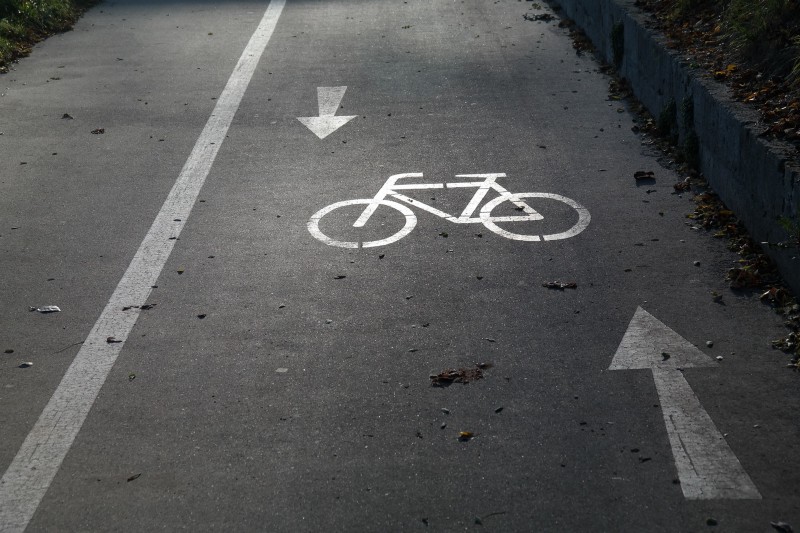
    Cycling in Vienna I have verbal and non-verbal conflict with other participants in traffic almost every day. Some of the interactions are very friendly, most are very unpleasant and confrontational. Some are with pedestrians, a lot are with older men in big cars (especially unpleasant usually). What all of them have in common is a sense of “elbows out”. Despite these almost daily interactions adding a lot of stress to my life, I think they offer a great opportunity to put a magnifying glass on some of the social patterns, underlying values and challenges of western society.

    Image by Hans Braxmeier on Pixabay

    Scarcity Of Resources (In This Case Space) & Win-Loose-Dynamics

    There just are not enough bike lanes to accommodate all the people on bikes, cargo-bikes and e-scooters, so everyone can fit comfortably. In many places there aren’t bike lanes at all or they are built in such a way that it is safer to cycle on the street. Because there is not enough dedicated space for cyclists, we move into the domain of the cars (the street) and sometimes into the domain of pedestrians (the sidewalk). Because space is limited and everyone wants to get there first, this is a prime recipe for conflict. Me going 30 km/h on my bike in front of a car is an offense to their tightly packed schedule. At the same time a long queue of cars at a traffic light is an offense to my thighs: If I stop I have to get going again (ohh that burn in the legs!) — I might as well wind my way around the cars and over the intersection before the light turns red again.

    It often seems as though traffic is a battle for space, for getting there first, the right to use the street.

    No Social Fabric as a Basis for Self Organization

    Public space can be viewed as a common pool resource: It is nearly impossible to completely exclude anyone from using it and it has a finite flow of benefits (i.e. if I take up space, you can not take up the same space at the same time; if a lot of cars are parked in the street that space is no longer available for an urban garden or a bike lane; you get the idea…). Common pool resources can be governed by 3 mechanisms: top down public administration by the state, privatization and governance by the market or by all stakeholders through a self-organizing governance process. You can read more about the conditions that need to be fulfilled for each of these mechanisms to work and why I think self-organization should be the tool of choice, in this article.

    For self-organization to work as a governance mechanism for common pool resources there are some conditions, that need to be met: the most important one is cohesion, i.e. relationships between the participants in traffic, i.e. social fabric. When we think about how the use of public space could be decided upon, the challenges become clear: there are multiple scales of infrastructure inhabiting the same space. Big roads that are connecting different districts to each other and are connecting the city to the surrounding region and the highway systems might be right next to smaller roads, plazas or parks. This concept of scales is relevant, because identifying the scale we are talking about tells us who the relevant stakeholders are, that need to be in relationship with each other to effectively self-organize around the governance of public space. For the small back road it might only be the people living on that street — for the 4 lane connection road the boundary is first of all harder to draw and second of all it encompasses a much bigger group of stakeholders. This should make it quite clear why we don’t see more self-organized city planning efforts: public space is a big wicked mess and we are not even meeting the first condition for emergent solutions. This doesn’t mean that self-organizing city planning is impossible, it just means that we don’t have the adequate social technology to meet the conditions for it yet.

    Insufficient Scope of Top-Down Governance

    Because self-organization is so tricky to make possible, public space is governed by municipalities (in the case of most cities at least). A municipality is a centralized institution that is devising plans for how the finite amount of public space should best be used. They are basing their plans on some rough idea of what everybody needs and wants, but mostly they seem to be operating on a default assumption about what is needed. I can’t be sure about this, but this is my guess about what this assumption sounds like, judging by my experience of public space:

    “We need cars to be able to get everywhere. Everyone should be able to have a car and drive it wherever they want, all the time.”

    Of course this is a bit polemic, there is a slight shift noticeable but the ratio of space dedicated to cars vs. other means of transport is still very skewed in favor of cars.

    I’m also not saying that cars have no place at all. This is simply to say, that the centralized institution, trusted with organizing the use of public space, has a limited capacity to understand needs and is susceptible to particular interests put forth by groups with a lot of resources (for example the fossil fuel, car and construction industries). I’m not claiming that the Viennese city government is especially corrupt (which also wouldn’t surprise me) — this is just the nature of centralized institutions.

    One more aspect is a lack of accountability, that is built into the democratic process most western countries are employing these days: Of course no one cares if the people are annoyed with public infrastructure, as long as city officials aren’t feeling any consequences for doing a bad job.

    To summarize: City government doesn’t have the capacity or even the incentive to know what the actual landscape of needs of citizens look like. The result is public space is divided according to particular interests.

    Focus on Guilt, Shame and Individual Behavior

    Because we are so used to the conditions for change being so bad, we tend to focus on individual behavior rather than systemic issues. I can’t tell you how many times I’ve been personally blamed and insulted for taking up space on the street with my bike — it happens all the time. I can however tell you how many times someone expressed their anger about the stupid layout of an intersection or the bike lane just ending: 0. Don’t get me wrong, me and my biking friends rant about it all the time (got to let it out somewhere). I’m talking about confrontations in traffic. Never has someone stopped next to me, rolled down their window and said: “Aren’t you also mad about how stupidly this intersection is laid out? Would you mind telling me about it and looking together if there is anything we can do to address this issue on a systemic level?”.

    Of course there is NGOs and civil society initiatives and social movements talking about these issues in systemic terms, but in day to day life on the street there seems to be no recognition of anything but individual guilt.

    This has of course to do with the lack of relationship between participants in traffic — it would be way harder to insult people you know and regularly interact with for nothing more than existing in public space.

    High Emotions, Sense of Identity and Fear of Death

    One additional reason that interactions in traffic are so unpleasant a lot of the time, has to do with the high emotional activation that people are experiencing. When I am riding my bike and a car cuts in right in front of me, or I have to brake or turn sharply to avoid someone suddenly stepping onto the bike lane, I am in survival mode. My amygdala takes over and I don’t have much control over the next thing I do — I am reactive rather than re-active. Probably my response to the person in the vehicle that should have given way to me but didn’t, will be rather unfriendly and accusatory. I know that this is not how I would normally react because almost always I have a moment of “ahh, damn, that is how I should have handled that situation”, once I had a chance to take a breath and get over the shock of almost crashing or being crashed into.

    Apart from the fear of physical injury, I have a sense that there is also a fear of social death that plays into the way people interact in traffic. The means of transport you choose is closely linked to other aspects of your identity a lot of the time. While this is especially true for people in cars (and even more so men in cars), I have also noticed a tendency in myself and my friends, to identify strongly in opposition to those people in cars: I am NOT one of them, I ride my bike, not only because I can’t afford a car, but because I have seen through the empty promise of status that comes with individual motorized transportation. It’s a hoax and I know it. They don’t. Us people on two wheels without a motor, we are the in-group.

    This is attached to a lot of other strands of political and social identity, so naturally the part of me, that strongly identifies with these things is very offended, when a guy in a suite, that is driving a Jaguar SUV tells me that I am a threat to public safety because I wear headphones while cycling (this literally happened to me the other day).

    Similarly for a lot of men in big cars it seems like, their sense of identity is so closely tied to how good they are at performing masculinity, that any hint at that being questioned is perceived as a direct assault on their whole being. The social construct of masculinity is fragile and always needs to be re-asserted by showing dominance over others. Conceding to a guy of lower status (me on my bike), that I was right to go over the green light and they should have looked and stopped before turning, while your wife is sitting next to you, seems to be about as big a threat to masculinity as cutting your balls off. So because the threat is so big, assertion of dominance must continue, no matter how obvious it is that you are wrong — roll down the window and swear at anyone who dears to question your righteous place at the top of the food chain.

    Conclusion

    Traffic is a messy and complex system. There are no straight forward solutions. In my view of the world the goal is very clear: a lot less cars, a lot more space for bikes and pedestrians and a lot more green spaces in cities is where we should orient. But how exactly this should be put in to practice, and what aspects should be particularly important has to be negotiated through some participatory process. Maybe democratic confederalism could be an inspiration for a governance model to start to get more people on board. What do you think?

    The idea for this article came to me after a week of particularly many unpleasant interactions in traffic. I am aware that I’m making a lot of claims and I would be honored to hear your opinion, if you think I got something wrong.

    Also, if you want to stay up to date with my work — my writing, podcasts, workshop offerings, additional resources — you can sign up to my monthly newsletter through this link or follow me on twitter. The topics revolve around systemic change, community building and regenerative practices for contributing to a livable future for all.